

The Profitability Paradox in UK Hospitality
Executive Summary
The UK’s restaurant industry is facing a profitability paradox.
While many restaurants operate at full capacity every Friday and Saturday, margins are razor-thin: the UK’s 100 largest restaurant groups turned £13.3bn of sales into just £204m of profit, about 1.5% (UHY Hacker Young via The Caterer, 2026). The biggest financial threat isn’t an unsuccessful weekend—it’s the cumulative losses from underperforming weekdays, particularly Tuesdays.
This report examines why quiet weekdays have become more damaging than busy weekends by analysing:
- Revenue volatility across the week
- Fixed operating costs
- Post-pandemic customer behaviour
- Hidden operational revenue leaks
- Data-backed strategies that successful operators use to improve weekday profitability
Key Findings
| Metric | ** Insight** |
|---|---|
| 40–60% | Saturday revenue typically exceeds Tuesday revenue |
| £800–£2,500 | Average weekday gross sales for UK independent restaurants |
| 55–65% | Revenue consumed by food and labour (Prime Costs) |
| 3–6% | Average net profit margin across UK full-service restaurants |
| £3.2 Billion | Annual hospitality food waste cost |
| 28% | UK workforce operating on hybrid work schedules |
| 67% | Remote workers choosing Tuesday as a work-from-home day |
| 5x cheaper | Retaining an existing customer versus acquiring a new one |
| Up to 95% | Profit increase from improving customer retention by just 5% |
1. The Tuesday Problem
Restaurants often judge performance by weekend revenue.
However, profitability depends on performance across all seven days.
Industry data shows:
- Independent restaurants typically generate £800–£2,500 on weekdays.
- Saturdays produce 40–60% more revenue than Tuesdays.
- Casual dining guests spend approximately £22–£35 per person.
- Fine dining customers often spend £75+ per head, with premium purchases concentrated almost entirely on weekends.
The problem is not simply lower customer numbers.
Restaurants operate with a fixed number of seats, making dining capacity a perishable asset.
Every empty seat during Tuesday lunch represents revenue that disappears forever.
2. Why Busy Saturdays Don’t Guarantee Profit
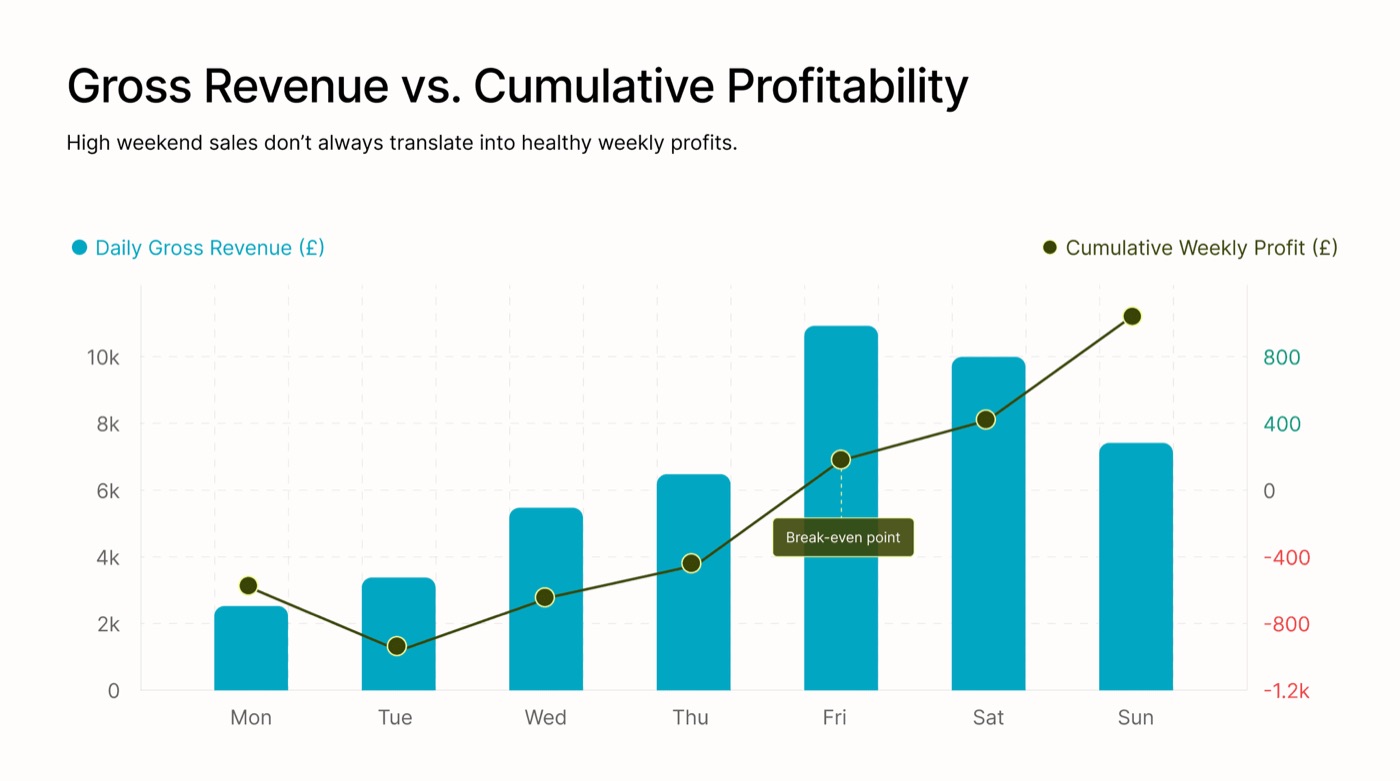
A fully booked Saturday creates an illusion of financial health.
In reality, restaurants continue paying nearly identical operating costs every day.
Fixed Costs Remain Constant
Restaurants continue paying for:
- Rent
- Utilities
- Insurance
- Business rates
- Equipment
- Minimum staffing
Whether 20 or 200 customers arrive, these expenses barely change.
Today’s financial reality shows:
| Cost Category | ** Percentage of Revenue** |
|---|---|
| Food + Labour (Prime Cost) | 55–65% |
| Rent | 10–15% |
| Net Profit | 3–6% |
Example:
A restaurant generating £4,000 on Saturday may produce only ** £833** in net profit after VAT, food, labour and overheads.
A Tuesday generating £800 can result in a ** £233 operating loss**.
Just three weak weekdays can erase an entire Saturday’s profits.
3. Customer Behaviour Has Changed
The weekday restaurant economy has fundamentally shifted.
Hybrid Working
According to UK workforce data:
- 28% of employees now work hybrid.
- 45% of managers and senior professionals work remotely.
- 67% choose Tuesday as a work-from-home day.
This significantly reduces:
- Business lunches
- After-work dining
- Walk-in traffic
- City-centre footfall
Meanwhile:
- UK town-centre footfall has declined 9% month-on-month.
- 79% of adults report higher living costs.
- Food inflation increased 4.2% year-over-year.
Consumers now save restaurant spending for weekends rather than casual weekday dining.
4. Hidden Revenue Leaks
Empty restaurants lose far more than sales.
Labour
Labour now consumes 33–35% of revenue, even during slow services.
Staff must still:
- Prepare food
- Open the venue
- Maintain service standards
Idle labour rapidly reduces margins.
Food Waste
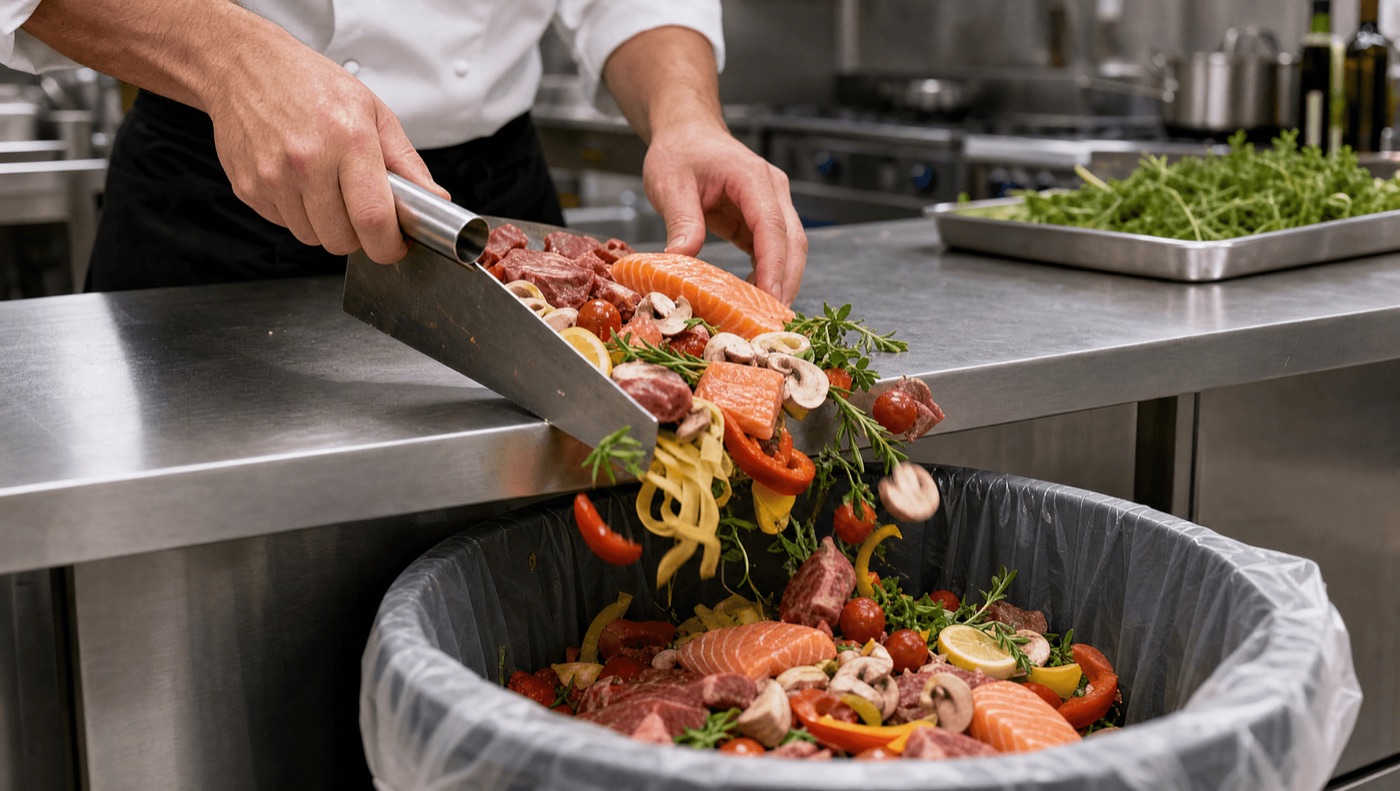
Food waste has become another major profitability drain.
Current UK figures show:
- 1.1 million tonnes of hospitality food waste annually.
- £3.2 billion lost every year.
- Around £10,000 wasted per restaurant annually.
- 39% of meals generate plate waste.
Unused inventory represents cash that can never be recovered.
Bridging the Midweek Profitability Gap
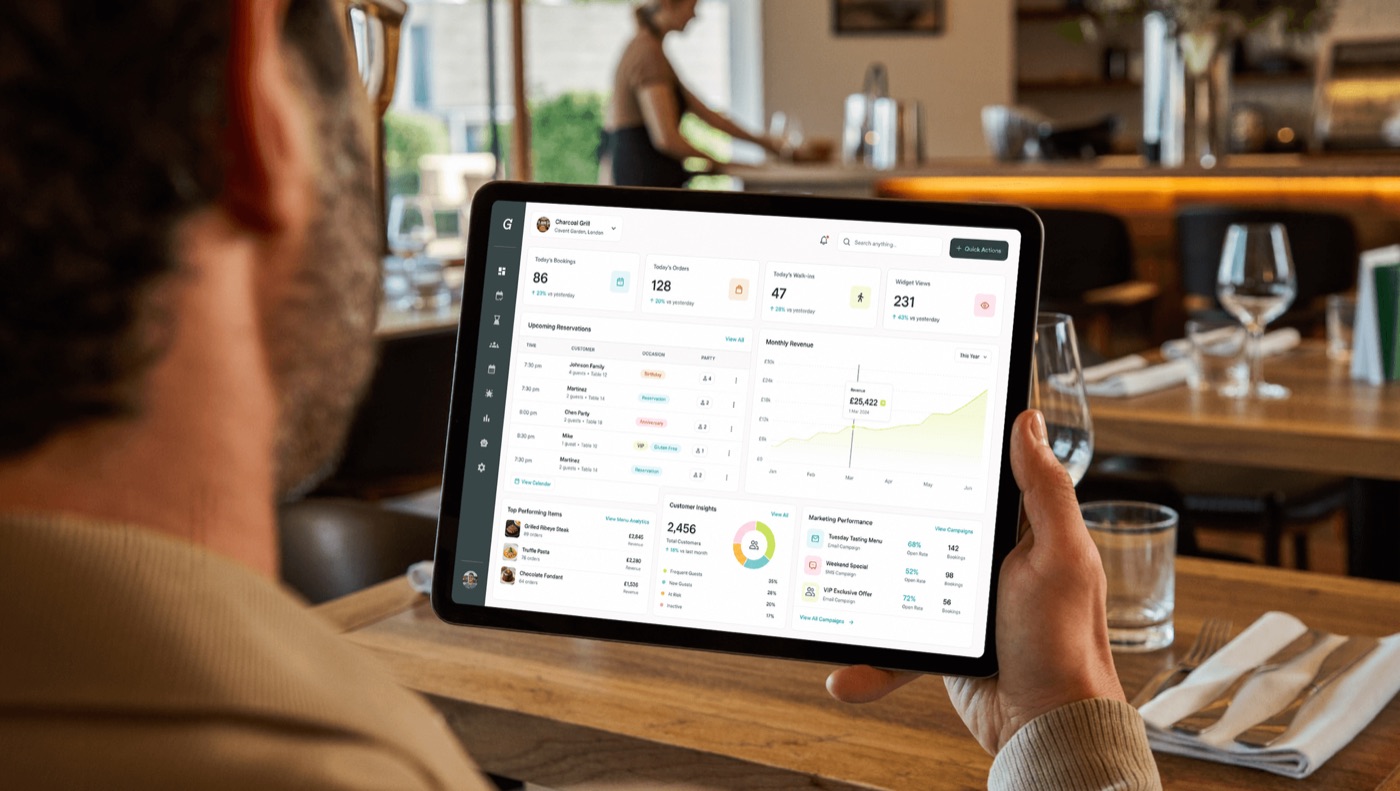
While rising costs and changing customer behaviour have made weekday trading increasingly difficult, the most successful restaurant operators are responding with data-driven customer retention rather than deeper discounts.
This is where restaurant growth platforms such as Growtality are helping operators shift their strategy. Instead of relying on commission-heavy third-party booking platforms, Growtality enables restaurants to build stronger relationships with their existing guests through CRM automation, customer segmentation, personalised campaigns, loyalty initiatives, and targeted midweek promotions.
For example, rather than offering blanket Tuesday discounts, restaurants can identify diners who haven’t visited in the last 30–90 days and automatically send personalised offers or event invitations. This approach helps increase weekday covers while protecting average spend and preserving weekend pricing power.
As operating costs continue to rise and customer acquisition becomes more expensive, investing in first-party customer data and retention is becoming a competitive advantage rather than a marketing luxury.
5. The Cost of an Empty Seat
Restaurants don’t simply lose sales.
They lose revenue opportunity.
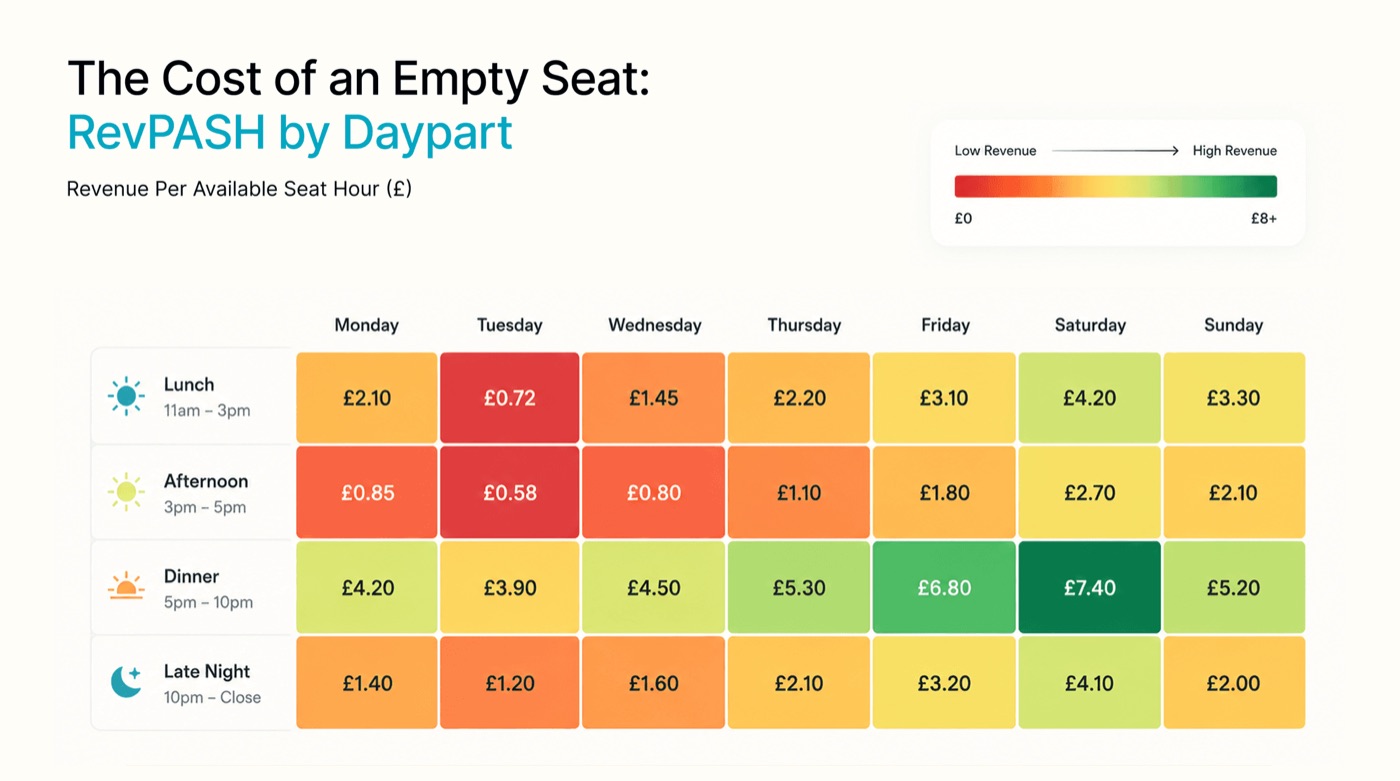
Revenue Per Available Seat Hour (RevPASH) demonstrates this clearly.
On Tuesday afternoons:
- Dining rooms may operate at less than half capacity.
- Two-person groups frequently occupy four-seat tables.
- Seat utilisation drops dramatically.
As a result:
- Revenue per seat falls.
- Labour efficiency declines.
- Kitchen productivity decreases.
6. Restaurants That Beat the Tuesday Slump
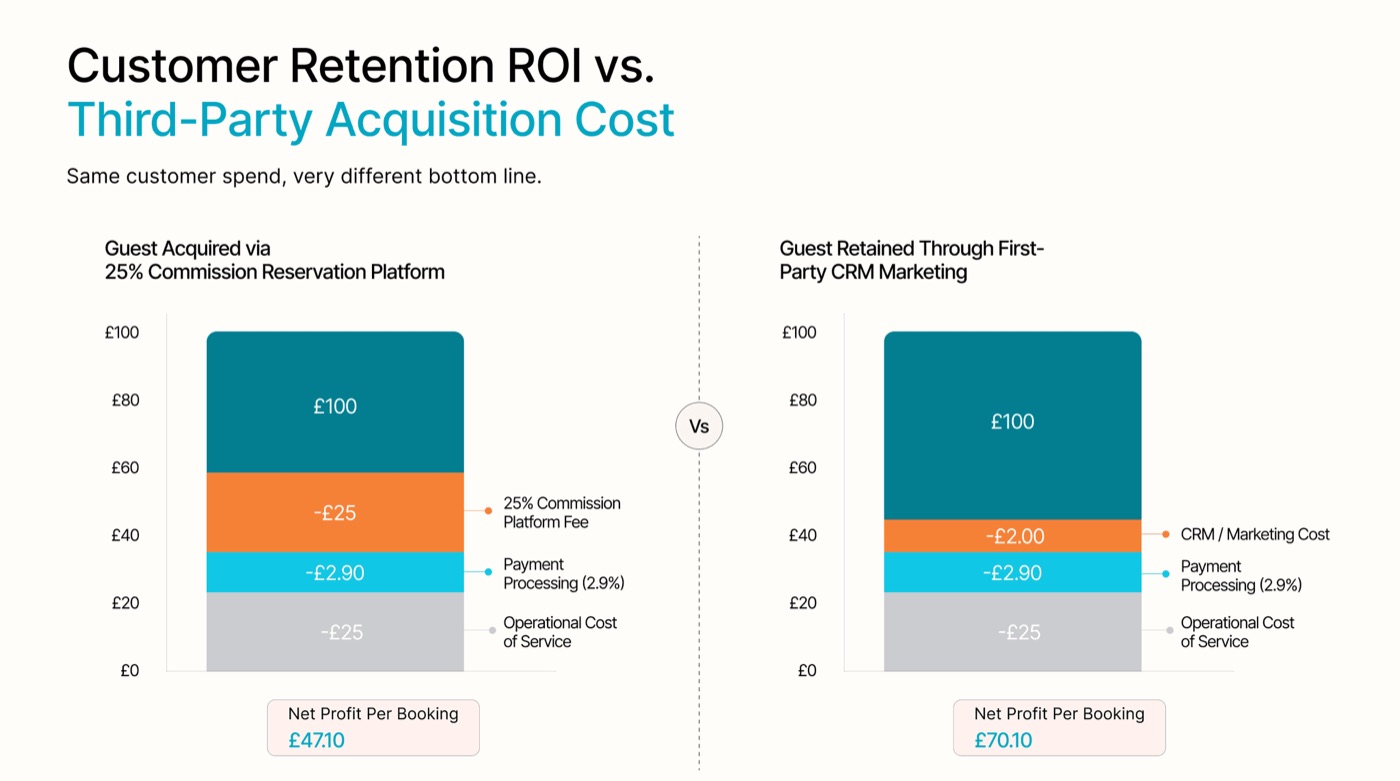
Successful operators rarely rely on heavy discounting.
Instead, they focus on customer retention.
Research shows:
- Retaining customers is 5x cheaper than acquiring new ones.
- Automated CRM campaigns achieve 34–45% email open rates.
- Reservation confirmation emails exceed 85% open rates.
- Increasing customer retention by just 5% can improve profits by ** up to 95%**.
One Manchester restaurant generated:
- 34% more campaign redemptions.
- £17,000 additional monthly revenue.
All through targeted weekday CRM campaigns.
Conclusion
The UK’s restaurant profitability challenge is no longer driven by weekends.
It is driven by weekdays.
Although Saturdays generate the highest revenue, they cannot consistently offset losses caused by empty dining rooms on Monday, Tuesday and Wednesday.
Restaurants that actively improve weekday demand through customer retention, data-driven marketing, better seating optimisation and CRM automation consistently outperform competitors operating on weekend volume alone.
The future of restaurant profitability will not be determined by how busy Saturdays become—but by how effectively operators eliminate the Tuesday revenue gap.
Questions owners ask
Why are quiet weekdays so costly for restaurants?
Rent, utilities, insurance and core staff cost the same every day, while Saturday revenue typically exceeds Tuesday's by 40–60%. Slow weekdays can erase the profit made on busy weekends.
What share of restaurant revenue goes on food and labour?
Food and labour together (prime cost) typically take 55–65% of a restaurant's revenue, leaving little room for slow trading days.
How can restaurants fill quiet weekdays without discounting?
Through customer retention rather than deeper discounts: automated campaigns to lapsed regulars, targeted midweek offers to the right guests, and higher-margin weekday trade such as events and corporate catering.