

Restaurant AI has reached an interesting turning point.
Despite constant headlines about AI transforming restaurants, most operators haven’t fully embraced it yet. Instead, they’re experimenting carefully—using AI where it saves time, improves marketing, or helps make better decisions while keeping people at the center of hospitality.
Our research gathered insights from 49 restaurant owners, operators, and executives across the ** United States, United Kingdom, and Canada**, revealing a refreshingly honest picture of AI adoption.
Key Research Highlights
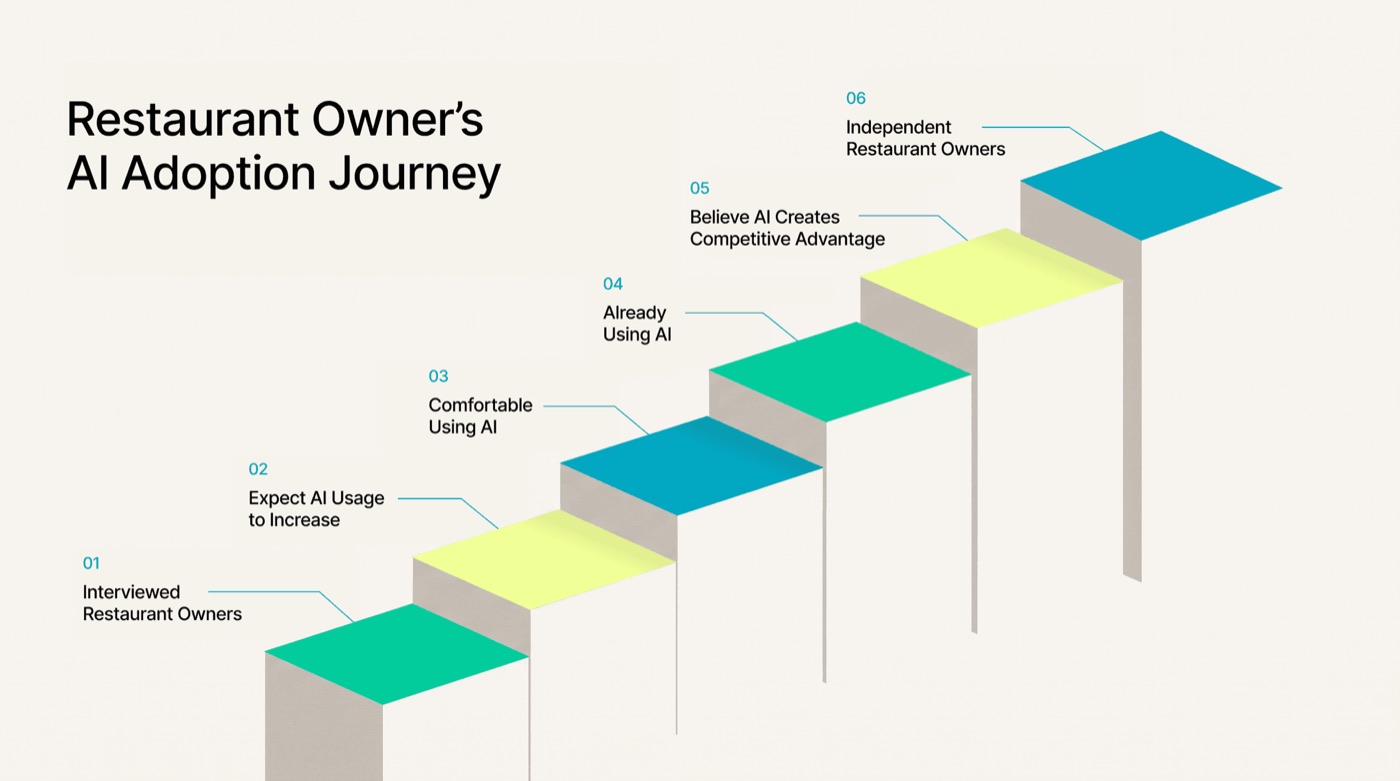
- 49 restaurant owners and operators interviewed
- 81% expect to increase AI usage in the coming years
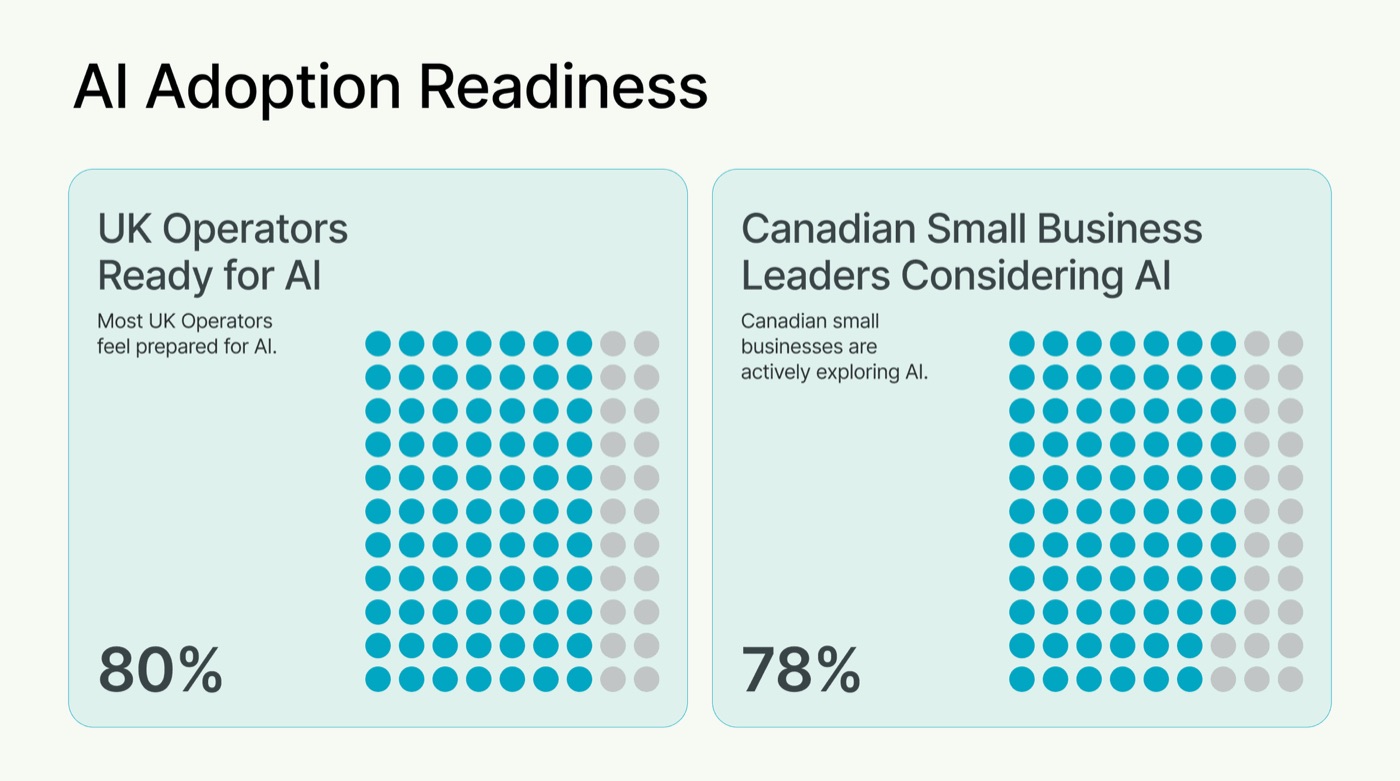
- 86% say they’re comfortable using AI
- Only 26% currently use AI in day-to-day restaurant operations
- 80%+ believe AI will improve efficiency and customer experience
- 67% of respondents were independent restaurant owners
AI Adoption Is Growing—But Carefully
The restaurant industry isn’t rushing into AI.
Instead, operators are taking a pragmatic approach. Most are comfortable with the technology but remain selective about where they implement it.
The biggest opportunities today aren’t robot servers or fully automated kitchens. They’re much simpler.
Most Common AI Use Cases
| AI Application | ** Restaurants Using It** |
|---|---|
| Sales & Revenue Analysis | 47% |
| Menu & Inventory Insights | 34% |
| Guest & Marketing Analytics | 32% |
| Menu Optimization | 26% |
| Marketing Automation | 19% (Full-Service Restaurants) |
| Customer Ordering | 6% |
These numbers show that operators are prioritizing back-office efficiency before customer-facing automation.
Restaurant Owners Want AI That Saves Time
Across every interview, one benefit appeared again and again:
Time.
Owners consistently described AI as a way to eliminate repetitive administrative work—not replace employees.
Examples included:
- Creating reports in seconds instead of hours
- Writing social media content
- Drafting email campaigns
- Building employee training manuals
- Forecasting inventory
- Reviewing sales trends
One bakery owner explained that reporting which previously required late-night manual analysis now takes just five seconds, allowing managers to focus on running the business instead of digging through spreadsheets.
Expert Insight: The biggest AI win isn’t automation—it’s giving restaurant teams more time to spend with guests.
Marketing Has Become AI’s Biggest Success Story
Marketing is where AI is already producing measurable value.
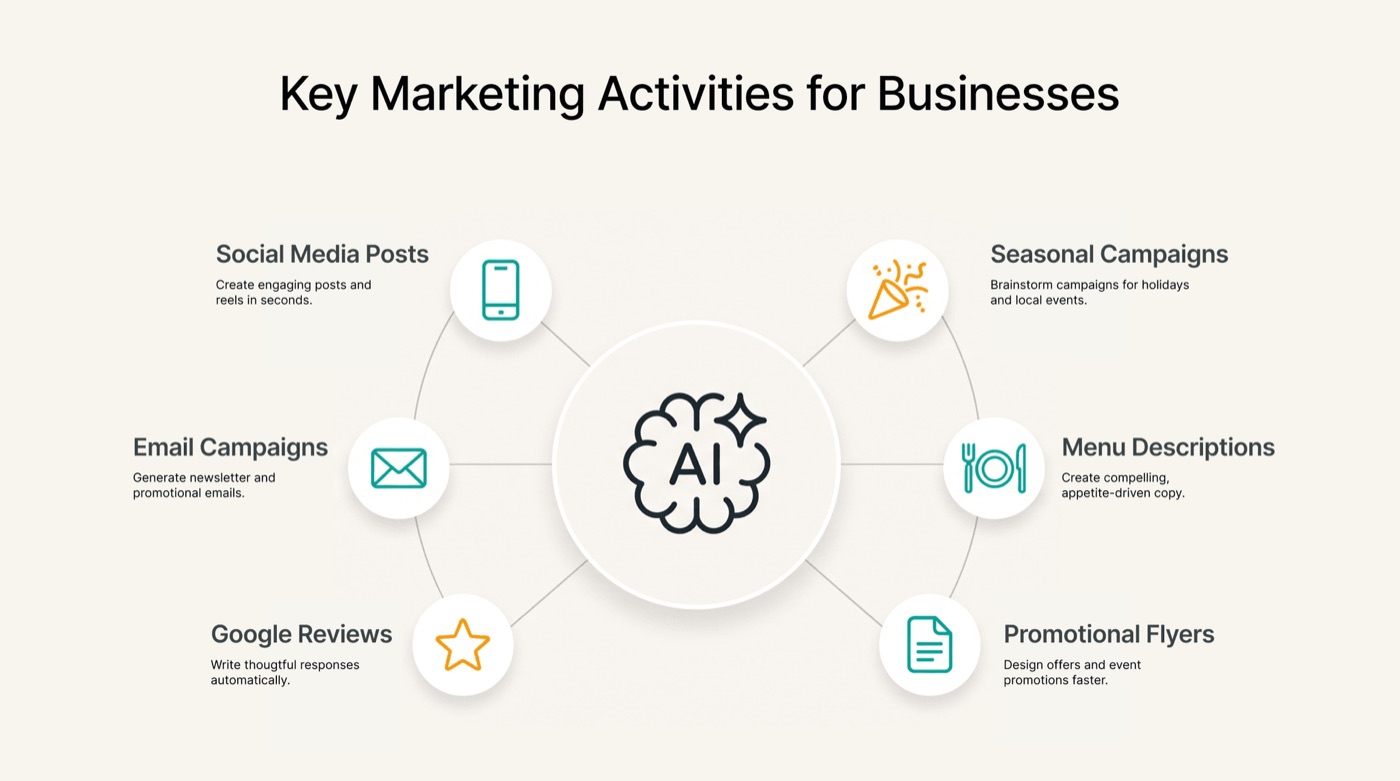
Operators are using ChatGPT and similar tools to:
- Write social media posts
- Generate email campaigns
- Respond to Google Reviews
- Create promotional flyers
- Write menu descriptions
- Brainstorm seasonal campaigns
According to Toast’s research:
- 32% already use AI for guest and marketing analytics
- 28% use AI for marketing automation
- Several operators reported creating content in minutes instead of hours
Rather than replacing marketers, AI is helping lean restaurant teams do more with fewer resources.
But Restaurant Owners Still Have Serious Concerns
Not everyone is convinced.
Many operators shared frustrations after experimenting with AI.
The biggest concerns included:
- Incorrect recommendations
- Data privacy
- Unclear ROI
- Losing the human touch
- Staff resistance
- Constant fact-checking
One owner summarized the challenge perfectly:
“If I have to double-check everything, I’ll just do it myself.”
Another admitted AI sometimes creates more work because outputs require significant correction before use.
Top AI Barriers
- Identifying the right use cases
- Poor data quality
- Lack of technical skills
- Cost uncertainty
- Privacy concerns
- Employee adoption
The Best Operators Use AI Alongside Human Judgment
One pattern appeared consistently throughout the research.
Successful restaurants never let AI operate independently.
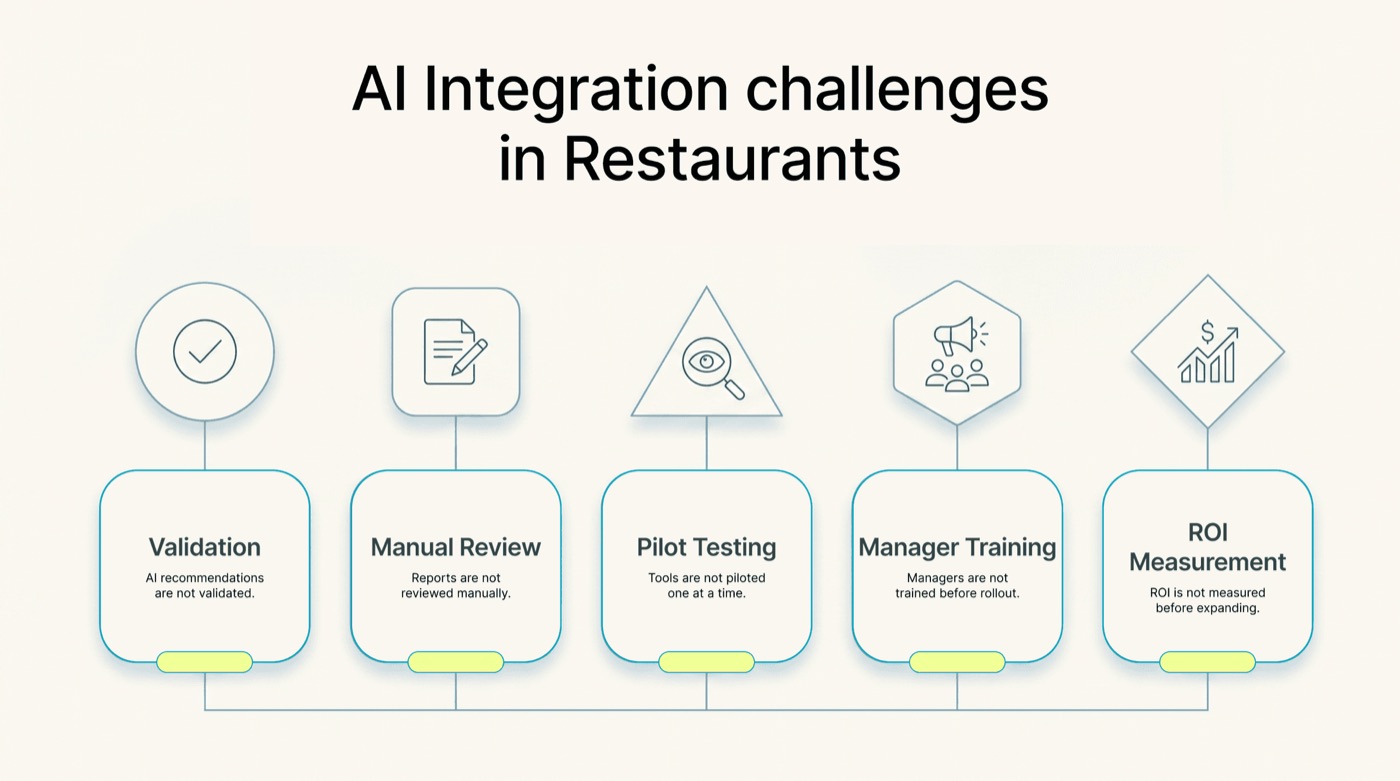
Instead, they:
- Validate AI recommendations
- Review reports manually
- Pilot one tool at a time
- Train managers before rollout
- Measure ROI before expanding
The research found that high-performing restaurants consistently combined AI with strong operational processes, rather than expecting technology to solve every challenge.
Independent Restaurants Face Different Challenges Than Chains
Large restaurant brands have dedicated technology teams and larger budgets.
Independent restaurants don’t.
Yet smaller operators often have one major advantage:
Speed.
Research demographics showed:
- 67% of respondents were independent restaurants
- 45% operated in fast-casual or QSR
- 35% represented casual dining
- 20% came from fine dining and pubs
Many independents reported adopting affordable AI tools for marketing, menu analysis, and customer feedback rather than investing in enterprise software.
What Restaurant Owners Expect Next
Restaurant owners don’t believe AI will replace hospitality.
Instead, they see AI becoming an invisible assistant working behind the scenes.
What Operators Expect AI to Improve
- Smarter forecasting
- Inventory management
- Personalized marketing
- Reservation management
- Customer service
- Staff training
Where Growtality Fits Into This Future
One of the clearest findings from this research is that restaurant owners don’t need dozens of disconnected AI tools.
They need practical solutions that solve everyday operational problems.
That’s where Growtality fits naturally—helping restaurants apply AI to marketing, customer engagement, analytics, and growth without sacrificing the personal hospitality that defines successful restaurants.
Final Thoughts
The numbers tell an interesting story.
While only 26% of restaurants currently use AI operationally, more than ** 80%** expect adoption to increase over the next few years.
The operators seeing the best results aren’t adopting AI because it’s trendy.
They’re adopting it because it:
- Saves time
- Improves profitability
- Delivers measurable ROI
- Supports employees
- Enhances the guest experience
AI isn’t replacing hospitality—it’s helping great hospitality scale.
Questions owners ask
How many restaurants use AI in 2026?
In interviews with 49 restaurant owners and operators, only 26% used AI in day-to-day operations, while 86% said they're comfortable with it and 81% expect to use more of it in the coming years.
What do restaurants use AI for?
Most commonly sales and revenue analysis (47%), menu and inventory insights (34%) and guest and marketing analytics (32%). Owners mainly value AI for saving time on repetitive admin.
What stops restaurants adopting AI?
Identifying the right use cases, poor data quality, lack of technical skills, cost uncertainty, privacy concerns and getting staff to use it.