
The order that pays someone else first
A family orders £30 of curry through a delivery app on a Friday night. The kitchen cooks it, the team packs it and, if you use your own drivers, your driver takes it to the door. Then the app takes its cut. At a typical 30% commission, that is £9 gone before you have paid for ingredients, staff, packaging or rent.
For a takeaway, that cut is not a small line on the P&L. Food costs, wages and energy already take most of the money from every order. When a third of the price goes to a marketplace, the margin left to run the business can disappear on the orders you work hardest for: Friday and Saturday nights.
The apps do something useful. They put your menu in front of people who have never heard of you. The problem is what happens next. The customer who found you on an app keeps ordering through the app, and you keep paying for a customer you already have.
What takeaway online ordering actually means
Takeaway online ordering, done directly, means customers order from your own ordering page rather than a marketplace. It usually lives on your website and works on a phone in a few taps. The order goes straight to your kitchen, the customer pays online, and you choose collection, delivery or both.
The difference is ownership. On your own page you set the prices, the delivery area and the fees. You keep the customer’s details, so you can thank them, reward them and bring them back. And the commission you pay is a small platform fee rather than a share of the whole order.
The maths on a normal week
Take a takeaway doing £6,000 a week through delivery apps. At 30% commission, that is £1,800 a week, or about £93,600 over a year.
Now suppose a third of those orders, £2,000 a week, come from regulars who would happily order direct if it were just as easy. Moving them to your own ordering page at a small platform commission keeps most of that £600 a week of app commission in the business: roughly £30,000 a year from customers you already have.
You do not need every customer to switch. Even moving your regulars changes the margin on your busiest nights.
What a good ordering page needs
It has to be as easy as the app
Customers are used to ordering in a few taps. Your page needs photos, clear prices, extras and sizes, saved details for next time and fast payment with cards, Apple Pay, Google Pay or PayPal. If ordering direct feels slower than the app, people will go back to the app.
Orders go straight to the kitchen
Direct orders should land on the same kitchen screen as everything else, in order, with notes and allergens on the ticket. A separate tablet for each channel is where orders get missed at 7pm on a Saturday.
You control the menu in real time
When something sells out, it should disappear from your page at once. Scheduled menus for lunch and dinner, and the ability to change prices without calling anyone, save the awkward phone call when a customer orders something you cannot make.
Every order builds your customer list
This is the part the apps keep for themselves. Each direct order should create a customer profile: what they order, how often and when they last came. That list is what lets you bring people back without paying for them again.
How to move regulars off the apps
Put your ordering link everywhere you already are
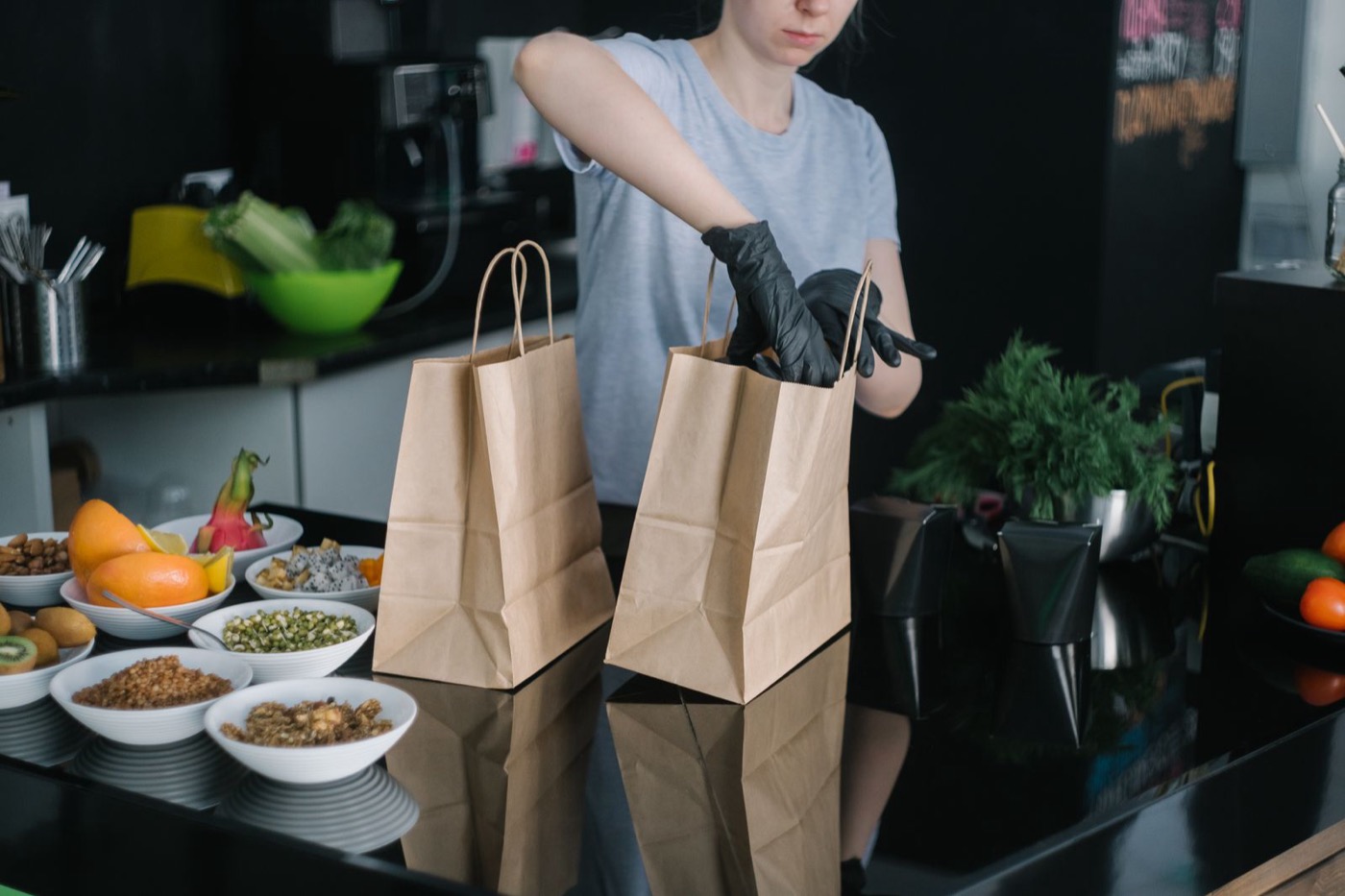
Add it to your Google Business Profile, your website’s homepage, your social bios and a card in every bag that leaves the kitchen, including app orders. The bag is the one place you can speak directly to an app customer.
Give people a reason to order direct
A small offer on the first direct order, or loyalty points that only come with ordering from you, gives regulars a reason to change a habit. Keep it simple and time-limited so it does not become a permanent discount.
Run the apps alongside, not against, your own page
Most takeaways keep at least one app while they build direct orders. Use the apps for reach and your own page for repeat customers. Over time, the balance shifts towards the channel where you keep the margin.
Measure what changes
Track three numbers each week: the share of orders that come direct, the commission paid to apps and the number of repeat direct customers. If direct orders are growing and app commission is falling, the plan is working. If not, look at where customers drop off: the ordering link, the checkout or the offer.
Growtality’s online ordering system gives you a branded ordering page, orders straight to your kitchen screen and a customer profile for every order. Everything sits in one platform with your loyalty, marketing and bookings, so the customers you win stay yours. If you run a takeaway, it is built for exactly this.
Try Growtality free for 14 days and start keeping more of every order.
Questions owners ask
What is takeaway online ordering?
Customers order from the takeaway's own ordering page instead of a marketplace. Orders go straight to the kitchen, the takeaway keeps the customer details and pays a small fee rather than marketplace commission.
How much can a takeaway save by taking orders direct?
A takeaway doing £6,000 a week through delivery apps pays about £1,800 a week at 30% commission, or around £93,600 a year. Moving even a third of those orders to direct ordering saves a large share of that.
How do you move regulars off the delivery apps?
Put your ordering link on your Google Business Profile, website, social bios and a card in every bag, give a simple time-limited reason to order direct, and keep the apps running alongside while direct orders grow.