The Rise of AI Phone Agents: Are Restaurants Ready for the Next Customer Expectation?
Not long ago, calling a restaurant meant patience. You'd wait through ringing phones, get placed on hold during the dinner rush, or hear a voicemail asking you to call back later.
Today, customers simply hang up.
The modern diner has been shaped by companies like Amazon, Uber, and Netflix—businesses that provide instant responses, seamless experiences, and around-the-clock availability. Those expectations no longer stop at e-commerce; they've reached restaurants too.
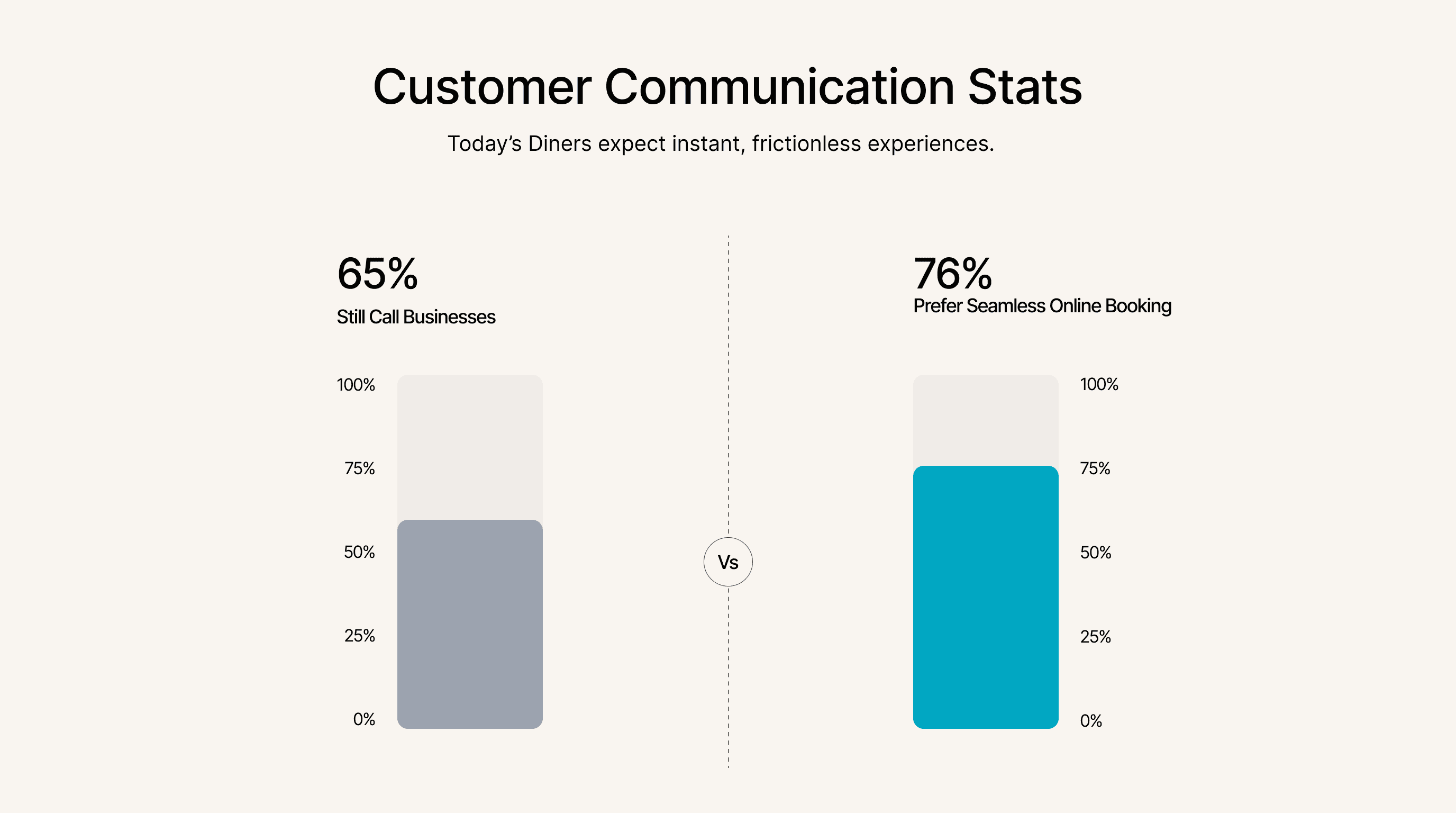
In the UK alone, 65% of consumers still contact businesses by phone, while 31% consider it their preferred communication channel. Yet at the same time, 76% of diners prefer booking through a restaurant's website, expecting a fast, frictionless experience regardless of how they reach out. The message is clear: customers don't care whether they interact with a person or technology—they care about getting an answer immediately.
When restaurants fail to answer the phone, they're no longer just missing calls—they're missing revenue, reservations, and customer trust.
The Hidden Cost of Every Unanswered Call
Imagine a busy Friday evening.
The dining room is full, servers are rushing between tables, the kitchen is working at full capacity, and the phone keeps ringing.
No one answers.
For many restaurants, this happens dozens of times every week.
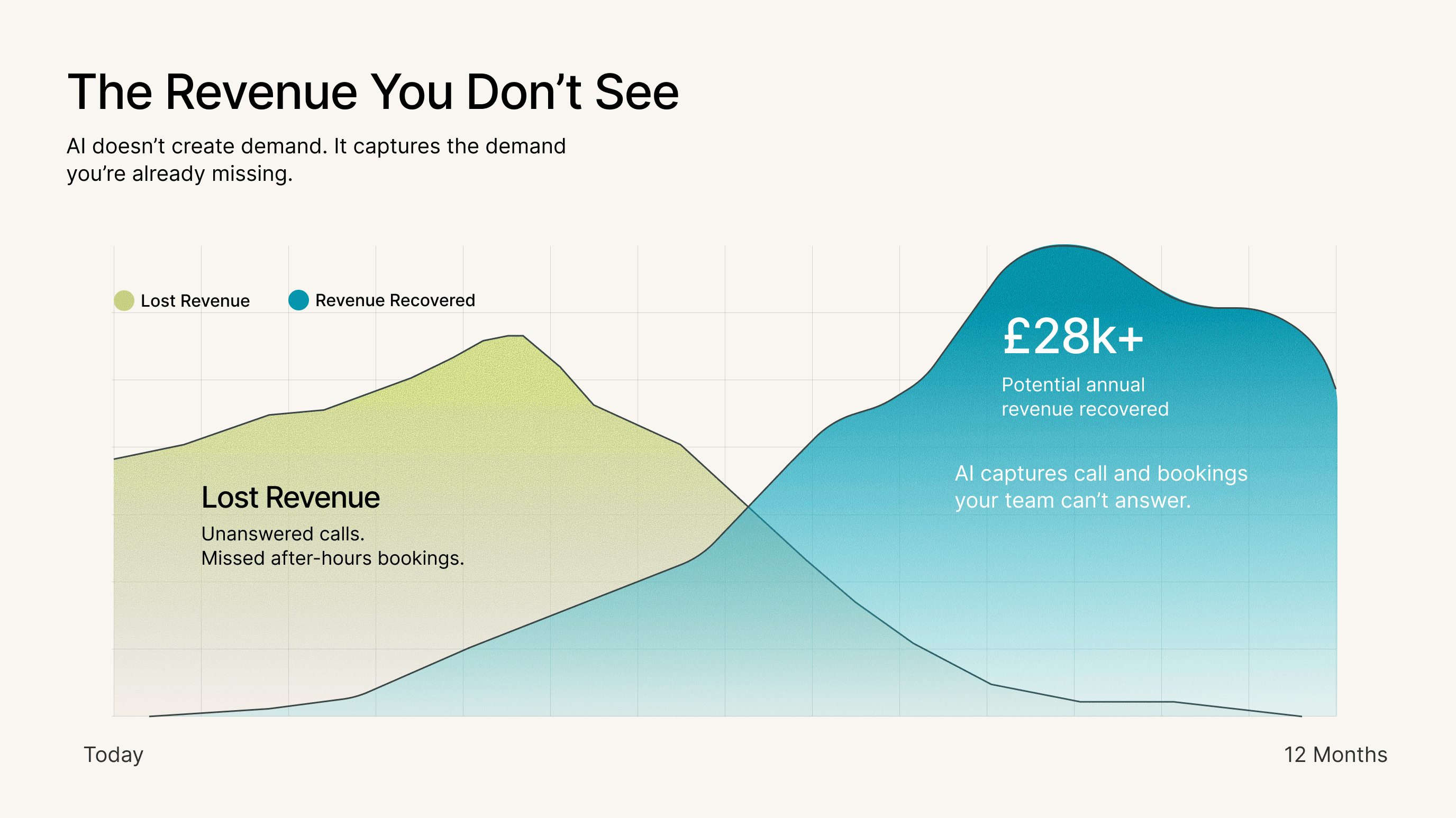
Industry research suggests the average restaurant misses around 150 phone calls every month, and 60–80% of those calls are genuine customer enquiries—people wanting to book a table, place an order, or ask a quick question before visiting. With an average conversion rate of around 70%, those unanswered calls can represent more than $28,000 in lost annual revenue per location.
What's even more concerning is customer behaviour:
90% of callers never leave a voicemail.
Only one in three customers will try calling again after being placed on hold.
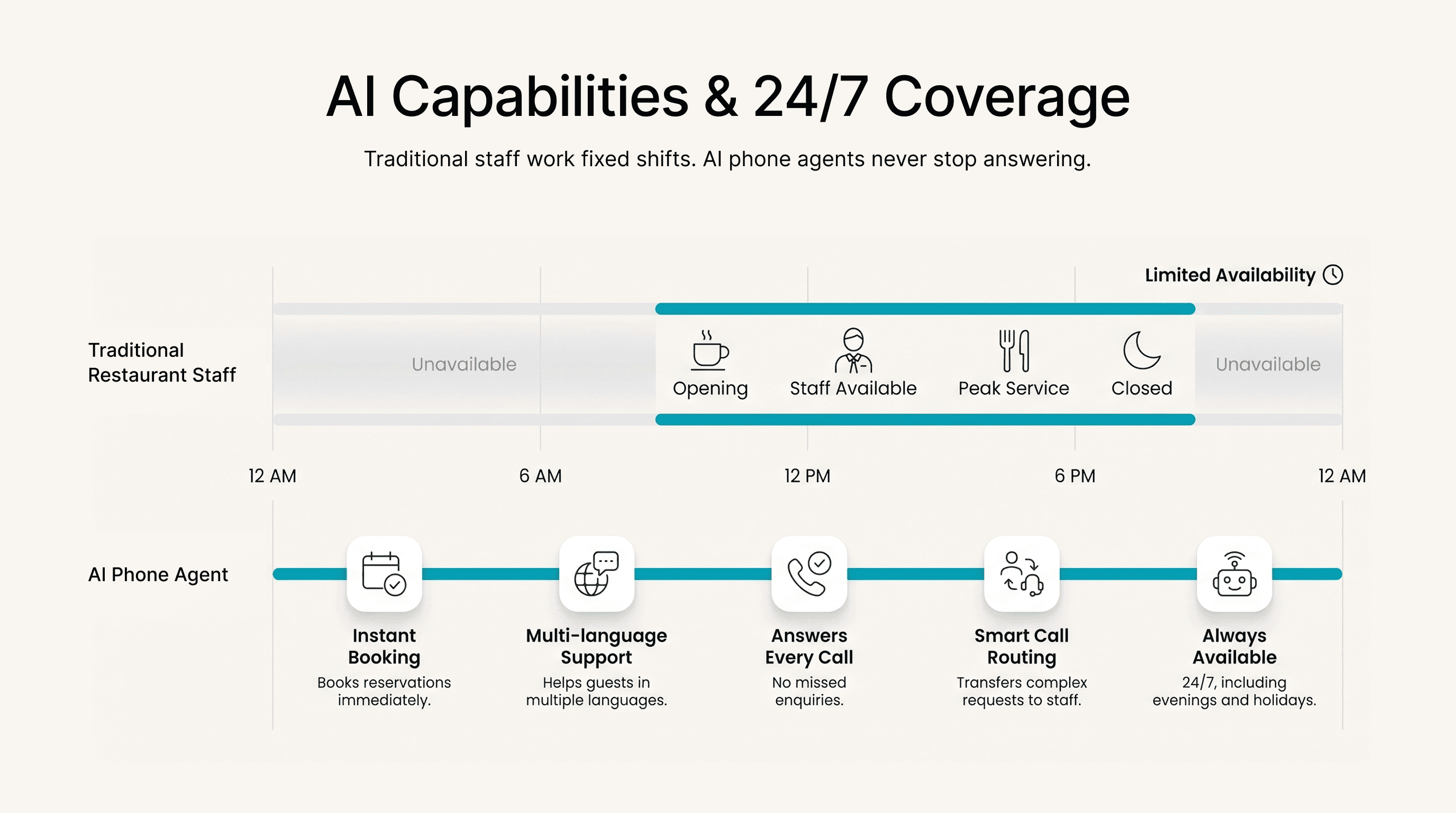
Nearly 60% of reservation calls happen after business hours, when restaurants simply aren't available to answer.
Customers rarely wait anymore.
They simply call the next restaurant.
And in an industry where acquiring a new customer is significantly more expensive than retaining one, every missed call becomes a missed opportunity.
Why This Problem Is Only Getting Bigger
The communication challenge isn't caused by poor service.
It's caused by reality.
Restaurants across the UK continue to battle labour shortages while operating under increasing financial pressure.
Recent hospitality data shows there are approximately 107,000 vacancies across the sector, representing the highest vacancy rate of any UK industry. More than 60% of hospitality businesses report staff shortages, forcing many operators to reduce opening hours or limit services. Meanwhile, labour costs now consume 25–35% of total restaurant revenue, making it increasingly difficult to hire additional front-of-house staff simply to answer phones.
Restaurant owners face an impossible balancing act:
Hire more staff and increase operating costs.
Ask existing employees to juggle guests and phone calls simultaneously.
Accept that some calls—and therefore some customers—will inevitably be lost.
None of these options creates a sustainable competitive advantage.
This is exactly where AI phone agents have begun changing the conversation.
The Emergence of AI Phone Agents
Unlike traditional answering services, today's AI phone agents are designed to have natural conversations rather than simply redirect calls.
Powered by speech recognition and conversational AI, these systems integrate directly with reservation platforms, ordering systems, and customer databases to handle routine conversations without human intervention.
Instead of waiting for a staff member, customers receive immediate assistance.
An AI phone agent can:
Instantly answer questions about opening hours, menus, or allergens.
Book tables in real time and send confirmation messages within minutes.
Take takeaway or delivery enquiries while directing customers to direct ordering channels.
Record catering or private event requests.
Communicate in multiple languages for international guests.
Escalate complex requests to staff whenever human assistance is needed.
The result isn't replacing hospitality.
It's ensuring that hospitality never goes unanswered.
AI vs. Traditional Staffing: The Numbers Tell the Story
For years, restaurants have relied on front-of-house teams to manage incoming calls alongside serving guests. While this human-first approach remains central to hospitality, it struggles to keep pace with today's customer expectations.
Research shows that 91% of callers expect a response within three minutes. If they don't receive one, many simply move on to another restaurant. An AI phone agent eliminates this waiting time by answering every call instantly—whether it's during a busy Saturday dinner rush or at 2 a.m. after closing hours.
The operational benefits quickly become clear:
Always available — 24/7 call handling without breaks or shift changes.
Scalable — Able to manage multiple conversations simultaneously.
Accurate — Automatically records dietary requirements, birthdays, special requests, and reservation details.
Consistent — Every customer receives the same fast, reliable experience.
Some early ROI studies even estimate that restaurants can recover hundreds of thousands of dollars annually by capturing orders and reservations that would otherwise have been lost, making AI one of the few operational investments capable of paying for itself relatively quickly.
Platforms such as Growtality reflect how the restaurant technology landscape is evolving, with AI becoming a natural part of everyday operations rather than a futuristic concept. As more restaurants embrace automation, AI phone agents are increasingly being viewed as another operational tool alongside online ordering, reservations, and CRM systems.
AI Isn't Replacing Hospitality—It's Protecting It
One of the biggest misconceptions surrounding AI is that it's designed to replace restaurant staff.
The reality is almost the opposite.
When repetitive phone enquiries are handled automatically, hosts and servers can spend more time where they create the most value—welcoming guests, solving problems, and delivering memorable dining experiences.
Industry experts consistently describe AI as an enhancement, not a replacement. Instead of interrupting dinner service to answer routine questions about opening hours or table availability, staff remain focused on the guests already inside the restaurant while every caller still receives immediate assistance.
The human touch remains the heart of hospitality.
AI simply ensures that no potential guest is left waiting for it.
Four Questions Every Restaurant Should Ask Today
As customer expectations continue to evolve, operators should begin evaluating their current phone experience by asking four simple questions:
How many calls go unanswered every week?
When do the majority of missed calls occur—during service or after hours?
How much revenue could those missed reservations or orders represent?
Could automation handle routine enquiries while allowing staff to focus on guests?
For many restaurants, answering these questions reveals that the biggest opportunity isn't attracting more customers—it's simply responding to the ones already trying to get in touch.
The Future Rings First
Customer expectations rarely move backwards.
Just as online reservations, QR menus, and mobile payments became everyday experiences, intelligent phone conversations are rapidly becoming the next standard for modern restaurants.
The restaurants that thrive over the next decade won't necessarily be those with the largest teams—they'll be those that remove friction from every customer interaction while preserving the warmth that defines great hospitality.
AI phone agents aren't replacing the people behind restaurants.
They're making sure every opportunity reaches them.
Because in an industry where every unanswered call could be a lost reservation, every answered conversation becomes a competitive advantage.