How Restaurants Are Keeping Up With Customer Preferences in 2026
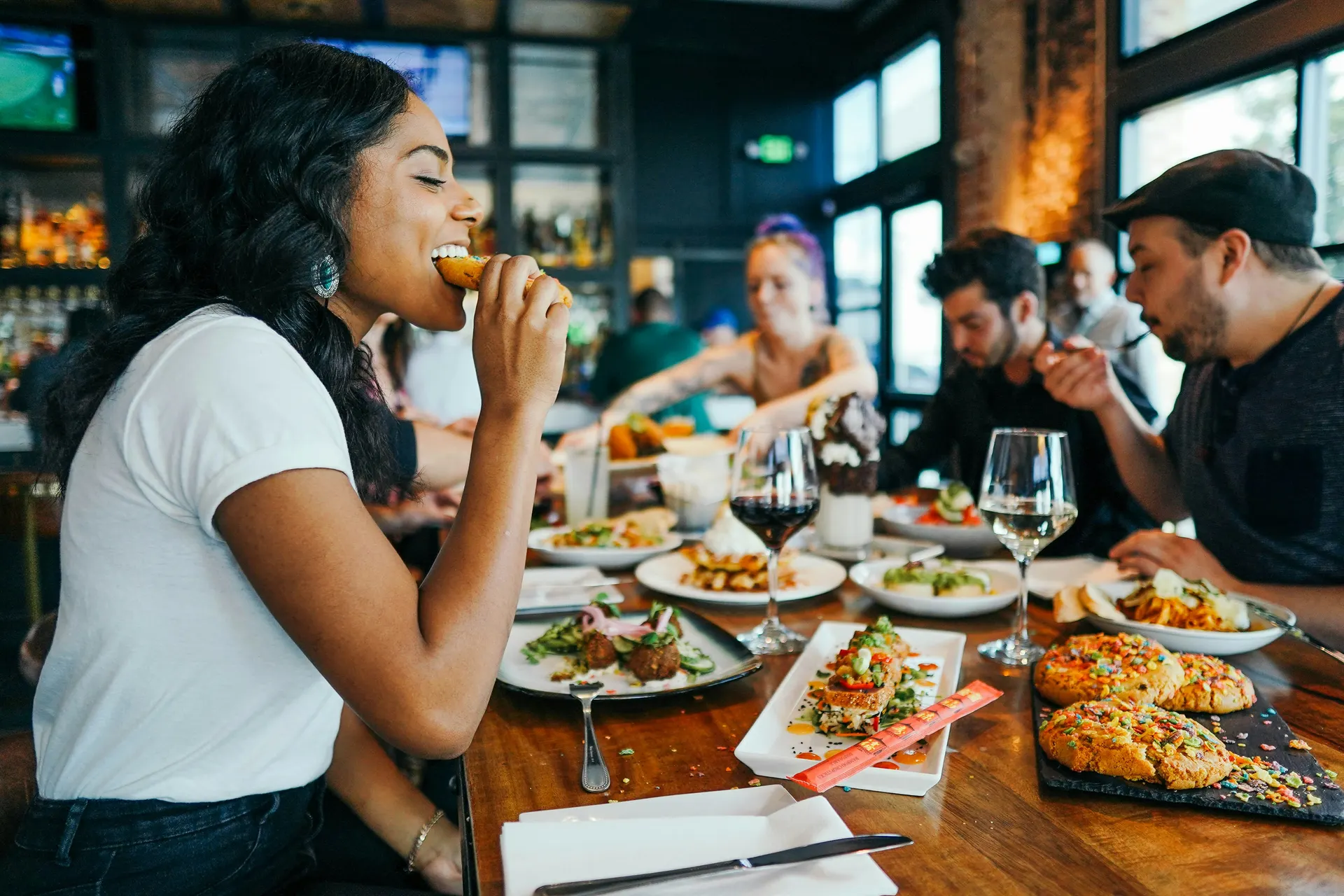
Customers haven't stopped eating out. They've simply become more selective about where they spend their money.
Despite rising costs, the restaurant industry is expected to generate $1.55 trillion in sales in 2026, proving that people still value dining experiences. The challenge isn't a lack of demand—it's that today's diners expect more for every dollar they spend. At the same time, over 90% of restaurant operators report pressure from rising food costs, labour expenses, insurance, and payment processing fees, while 42% say they're operating with flat or negative profits. The restaurants succeeding in this environment aren't just serving better food—they're adapting to what customers genuinely want.
Customers Want Value, Not Just Lower Prices
One of the biggest misconceptions in hospitality is that customers only care about finding the cheapest meal. That's no longer true.
Inflation has changed how people spend, but it hasn't stopped them from treating themselves. Instead, diners are asking a different question: "Is this experience worth my money?"
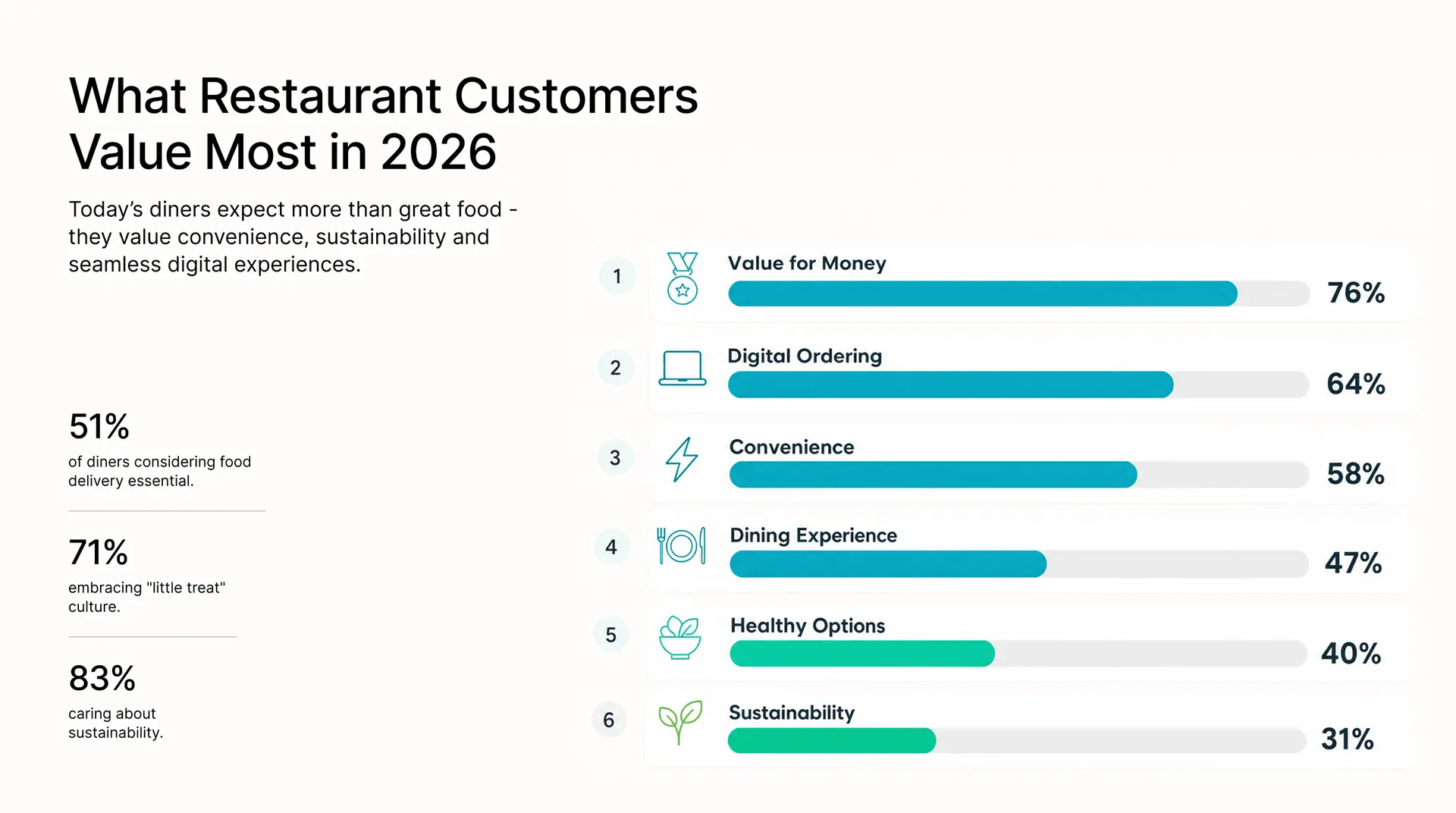
This shift has fuelled what researchers call "little treat culture." Around 71% of consumers say they use small indulgences—like eating at their favourite restaurant or grabbing a premium coffee—to improve their mood during financially stressful times. Rather than cutting dining out completely, people are eating out less frequently but choosing places that feel memorable.
Successful restaurants understand this. Instead of offering endless discounts that hurt their margins, they're introducing early-bird menus, weekday specials, and limited-time experiences that create value without reducing quality.
Chili's is a great example. By keeping menu price increases between 2–3%, compared to around 4% at many fast-food chains, the brand repositioned itself as the better-value option and achieved an impressive 31% increase in same-store sales.
Convenience Is No Longer Optional
Convenience has evolved from a competitive advantage into a basic expectation.
Today, 51% of consumers consider delivery and takeaway an essential part of their lifestyle. That number climbs to 67% among Gen Z and 64% among Millennials, making digital ordering one of the biggest drivers of restaurant revenue.
What's even more interesting is how quickly people make ordering decisions. Research shows most customers decide what to order within 5–10 minutes of opening a delivery app. During that short window, high-quality food photography, simple menu descriptions, positive reviews, and a smooth checkout experience become the deciding factors.
Many successful operators now create separate delivery menus that feature dishes designed to travel well while keeping preparation fast and consistent.
Health, Transparency, and Better Choices Matter More Than Ever
Modern diners want to know exactly what they're eating.
Instead of vague claims like "healthy" or "natural," customers expect nutritional information, allergen labels, ingredient transparency, and flexible portion sizes. The growing popularity of high-protein diets and GLP-1 weight-loss medications has also increased demand for lighter meals and protein-focused menus.
The beverage category is changing too. Alcohol consumption has fallen to its lowest level in decades, while premium mocktails and zero-proof drinks continue gaining popularity—especially among Gen Z.
Sweetgreen responded by expanding beyond salads and introducing protein plates featuring chicken, steak, and salmon. The strategy helped increase dinner traffic by 10%, showing that adapting menus to customer lifestyles can directly influence revenue.
Social Media and AI Have Become the New Front Door
Years ago, customers found restaurants by walking past them or searching Google.
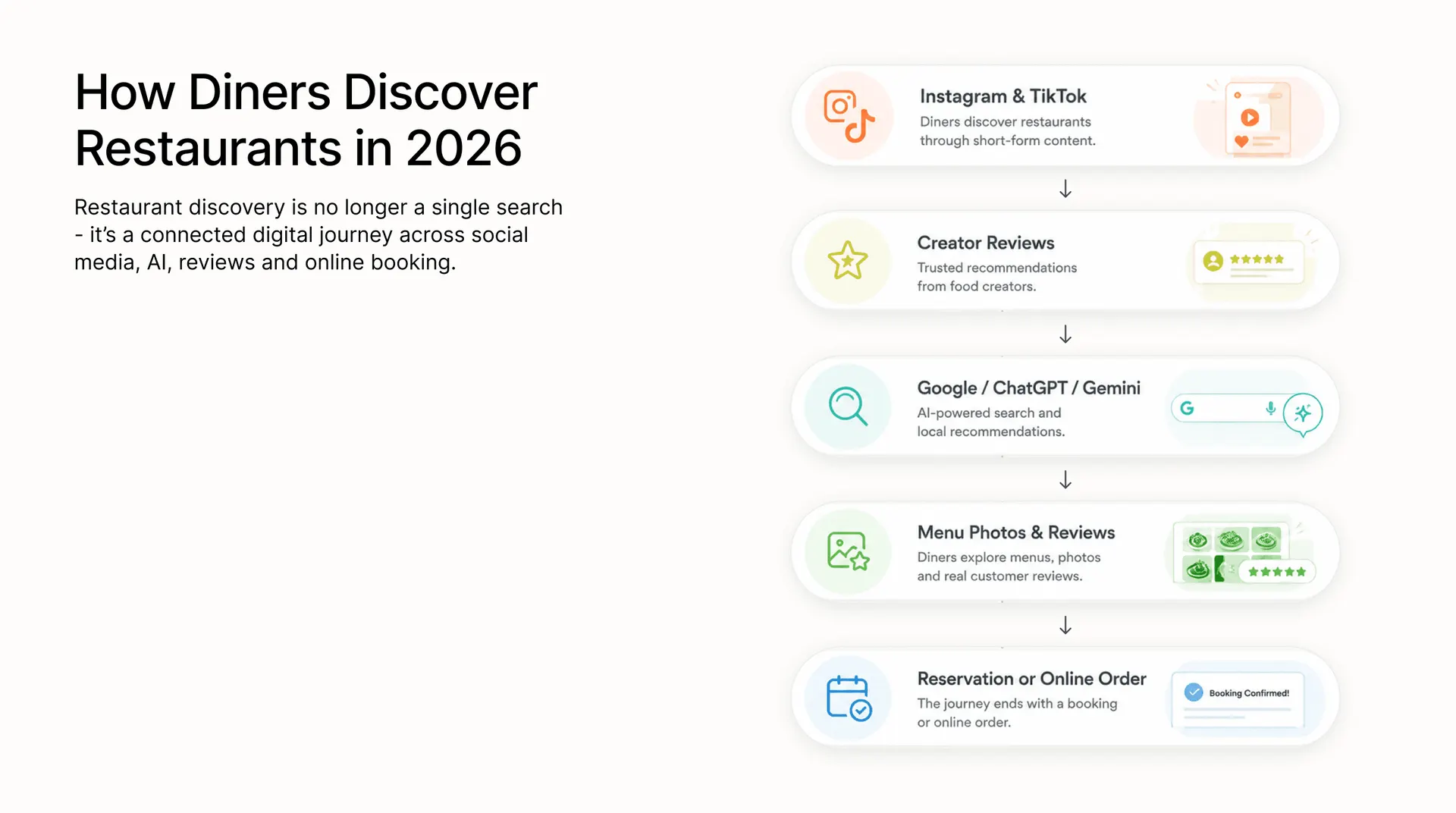
Today, they discover them through Instagram Reels, TikTok, creator recommendations, Google, and increasingly, AI tools like ChatGPT and Gemini.
In fact, 44% of diners plan to use conversational AI to discover restaurants in 2026, yet 83% of independent restaurants remain invisible to these platforms because their websites lack structured menus, consistent business information, and proper schema markup.
Restaurants that invest in professional food photography, updated Google Business Profiles, structured menu data, and authentic customer reviews are giving themselves a significant competitive advantage in AI-powered search.
Technology Is Helping Teams Deliver Better Hospitality
The best restaurants aren't replacing people with technology—they're helping people work better.
Restaurants are investing in AI phone assistants, kitchen automation, predictive staff scheduling, and first-party CRM systems that make operations smoother while allowing staff to spend more time with guests.
This matters because labour shortages continue to affect the industry. Around 80% of restaurants report being understaffed, while replacing and training a single employee now costs an average of $3,037. Smart technology helps reduce operational pressure without compromising the guest experience.
The Restaurants Winning in 2026 Are Adapting Faster
Restaurant success today isn't about following every trend—it's about understanding which customer expectations are becoming permanent.
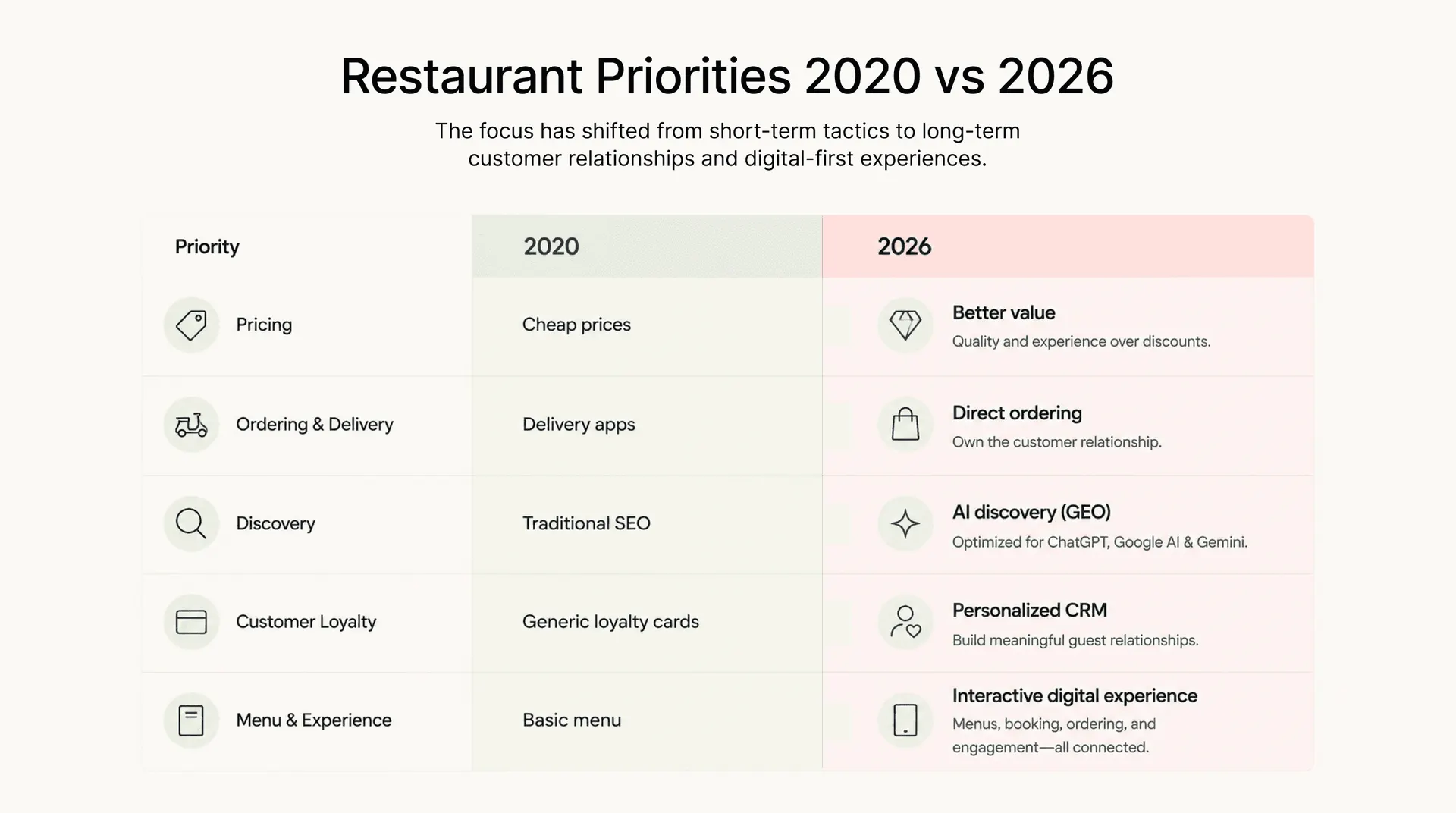
Customers want value without sacrificing quality. They expect effortless digital experiences, healthier choices, transparent information, memorable dining occasions, and personalised communication after every visit. The restaurants responding to these changes are building stronger loyalty while protecting their margins in an increasingly competitive market.
The lesson is simple: customer preferences will continue evolving, but restaurants that listen, adapt, and invest in better guest experiences will always stay ahead.
Because in 2026, people aren't simply choosing a place to eat.
They're choosing a restaurant that understands them.