Private Dining and Events: The Revenue Stream Most Independent Restaurants Ignore
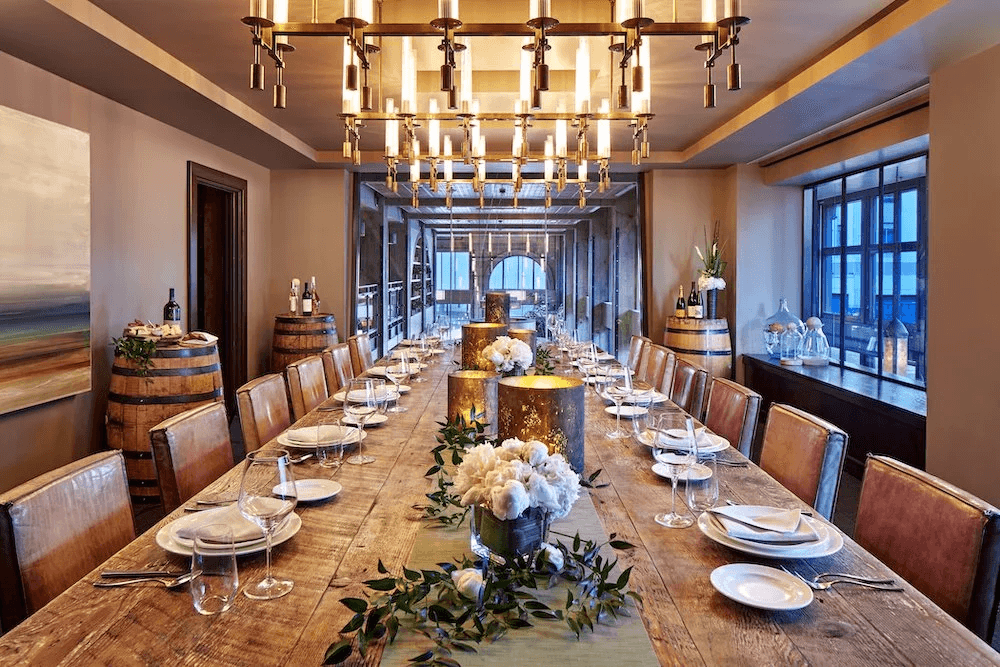
The Untapped Margin in Global Hospitality
Executive Summary
Most restaurants judge capacity by how full the dining room is on a Friday night. Almost none judge it by how empty the private room sits on a Tuesday.
That's an expensive blind spot. Private dining and events routinely deliver margins of 20% or higher — several times the 3–5% net margin most full-service restaurants operate on for regular walk-in covers. The demand is already there: diners increasingly want group and private options, and the global private dining market is projected to nearly double by the mid-2030s. Most independent restaurants still treat events as an occasional favor rather than a real product line — and leave the highest-margin revenue on the table because of it.
This report examines why private dining and events remain one of the most under-used levers in independent restaurants, by analyzing:
The real margin gap between walk-in covers and pre-booked private events
Why a full dining room doesn't mean the business is capturing its best margin
Shifts in how corporate and social groups want to book and gather
Hidden leaks — slow response times, missing process — that quietly kill event bookings
The true cost of a private room or a slow weeknight sitting unused
What operators who treat events as a disciplined product line do differently
The opportunity isn't regional. A private room sitting empty on a Tuesday represents the same lost margin whether the restaurant is in Chicago, Dubai, or Singapore.
Key Findings
Metric | Insight |
|---|---|
20%+ | Typical margin on private dining and events |
3–5% | Average net profit margin on regular full-service dining, for comparison |
$14.8B → $29.6B | Global private dining experiences market, 2025 projected to 2034 (8.0% CAGR) |
40% | Projected growth in private dining demand in 2026 |
34.2% | Share of the global private dining market currently held by North America — leaving most of the global opportunity elsewhere |
11% | Year-over-year increase in groups of six or more dining out |
36% | Diners who say they want more group and private dining options |
30–50 guests | Size of the fastest-growing event category — micro-events and small private gatherings |
#1 | Rank of lead response time as the factor that determines whether an event inquiry converts to a booking |
1. The Untapped Revenue Problem
Most independent restaurants are built around walk-in covers — success is measured by how many tables turn on a busy night.
Private and event capacity gets treated as an afterthought: a back room used "if someone asks," rather than a revenue stream with its own pricing, process, and demand curve.
Meanwhile, the appetite is already there:
More than a third of diners say they specifically want more group and private dining options.
Groups of six or more are dining out 11% more than a year ago.
The global private dining market is growing at roughly 8% a year, expected to nearly double in size by the mid-2030s.
The demand isn't the gap. The gap is that most restaurants haven't built a way to capture it.
2. Why a Full Dining Room Doesn't Guarantee the Best Margin
A packed Friday night feels like success. It isn't always the most profitable night on the calendar.
Regular Walk-In Service
Standard covers carry real variability — no-shows, last-minute cancellations, walk-in discounting, and (where relevant) delivery commissions all quietly erode the margin a full room appears to represent.
Private Events
A pre-booked private event comes with a deposit, a confirmed headcount, and a set menu decided in advance — which is exactly why the margin runs so much higher.
Revenue Stream | Typical Margin | Predictability |
|---|---|---|
Regular walk-in dining | 3–5% | Variable — no-shows, walk-ins, discounting |
Delivery / third-party channels | Lower still after commission | Variable |
Private dining & events | 20%+ | Pre-booked, deposit-secured, fixed menu |
A full dining room and a fully booked private room are not the same kind of night — one is variable, the other is close to guaranteed.
3. Customer Behaviour Has Changed
The kind of gatherings people want to book has shifted noticeably.
"Bleisure" and Corporate Demand
The blending of business and leisure travel is creating steady new event demand — corporate teams increasingly want smaller, more frequent gatherings (a quarterly kickoff dinner, a client dinner) rather than one large annual event.
Micro-Events
Smaller, higher-end gatherings — micro-weddings and elopements in the 30–50 guest range — are growing quickly, and they carry a noticeably higher spend-per-head on premium food and beverage than a standard large event.
Simplicity as the Deciding Factor
Clients increasingly expect turnkey packages — one price covering food, AV, and florals — rather than piecing an event together themselves. Restaurants that can't offer that simplicity lose the booking to a venue that can.
4. Hidden Revenue Leaks
Most lost event revenue never shows up as a rejected quote. It shows up as an inquiry that was never answered fast enough to become one.
Slow Response Time
Lead response time is consistently the single biggest factor in whether an event inquiry turns into a booking — yet many independent restaurants let inquiries sit for days before anyone replies.
No Formal Process
Without a standard Banquet Event Order — guest count, menu, timeline, staffing, dietary notes, all in one place — events run on memory and last-minute scrambling, which shows up as staffing shortfalls and menu errors on the night itself.
Treated as a Favor, Not a Product
When events are booked informally, with no set minimums or deposit policy, pricing drifts down and margin quietly disappears with it.
Idle Weeknight Capacity
The dining room fills on Friday and Saturday. The same private room often sits completely empty on Monday through Thursday — precisely the nights it's easiest to book without competing against walk-in demand.
5. The Cost of an Empty Private Room
An unbooked private room isn't a neutral cost. It's lost margin at the exact time it would have been easiest to capture.
Night | Typical Walk-In Demand | Private Event Opportunity |
|---|---|---|
Monday–Wednesday | Low | High — capacity is otherwise unused |
Thursday | Low–Moderate | High — ideal for corporate bookings |
Friday–Saturday | High | Limited — competes with peak walk-in covers |
Sunday | Moderate | Moderate — strong for social/family events |
The nights independent restaurants most often leave the events calendar blank are exactly the nights an event costs the business nothing in lost walk-in revenue — and returns the highest margin on the calendar.
6. Restaurants That Beat the Under-Utilization Trap
The operators capturing this revenue treat events as a distinct product line — not a favor.
Evidence shows the highest-return practices are:
Set dedicated pricing and minimums for private events, separate from the regular menu.
Respond to every inquiry the same day — since response speed is the top factor in winning the booking.
Use a formal event order for every booking — guest count, menu, timeline, staffing, and dietary notes documented in one place.
Track event revenue through the POS, not from memory, so true margin per event is visible rather than assumed.
Target weeknights specifically for event marketing, rather than competing with the restaurant's own peak-night demand.
Build repeat corporate relationships — using past client data to pitch recurring bookings like quarterly team dinners.
Approach | Effort Required | Payoff |
|---|---|---|
Dedicated event pricing & minimums | Low, one-time setup | Protects margin, avoids underpricing |
Same-day inquiry response | Low, process change | Directly improves booking conversion |
Formal event order for every booking | Low, one-time template | Reduces staffing and menu errors |
POS-tracked event revenue | Moderate | Reveals true margin instead of guesswork |
Weeknight-targeted event marketing | Moderate | Fills otherwise idle capacity |
Restaurants that treat private dining as a real product line aren't just adding revenue — they're capturing the highest-margin nights on their calendar, on the days that would otherwise sit empty.
How Growtality Helps
Winning private event revenue starts with not losing the inquiry in the first place.
Growtality centralizes booking inquiries and guest history in one place, so no lead sits unanswered while a competitor responds faster. Past corporate clients and repeat groups are visible at a glance — making it easy to pitch a recurring booking instead of starting from zero every time. And with event revenue tracked alongside regular covers, managers can finally see which nights, and which packages, are actually driving margin instead of just filling the room.
Faster responses. Fewer forgotten weeknights. That's what turns an empty Tuesday into the most profitable night of the week.