Inside the UK's Delivery App Economy: What Restaurants Really Think in 2026

The UK's food delivery market is bigger than ever.
By 2026, it's expected to reach £14.3 billion, and around 1 in 5 dining occasions now involve delivery. Ordering food has become part of everyday life, fuelled by convenience, hybrid working, and mobile-first customers.
But behind the growing number of orders, many restaurant owners are asking a different question:
Are delivery apps actually making restaurants more profitable?
The answer isn't as simple as "more orders = more revenue."
Delivery Is Growing Faster Than Ever
Ordering through delivery apps is now a normal habit across the UK.
Whether it's a Friday takeaway, a quick lunch while working from home, or a late-night meal, customers expect restaurants to be available online.
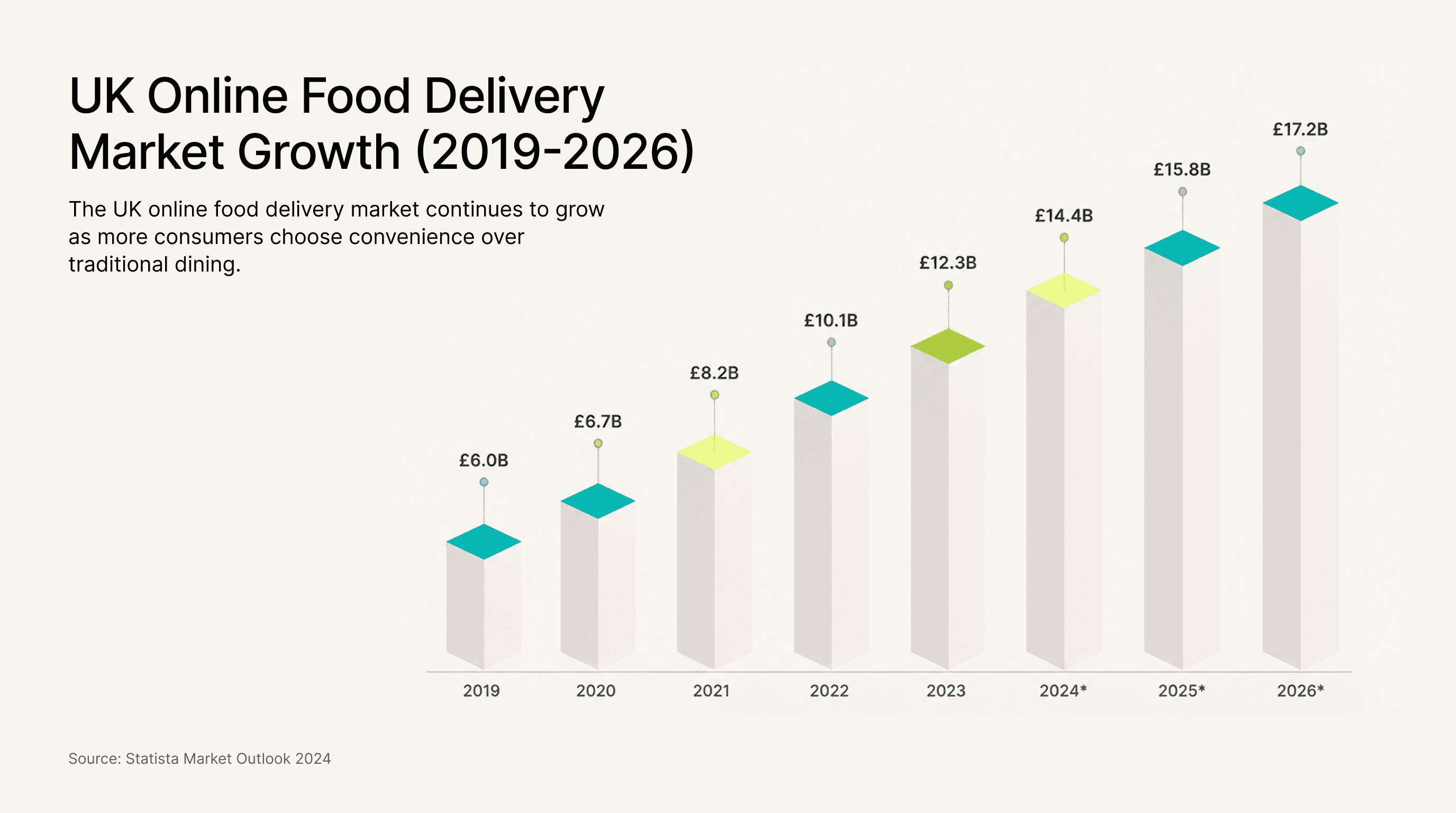
This shift has helped restaurants reach more customers than ever before.
However, increased demand has also increased competition, marketing costs, and dependency on third-party platforms.
More Orders Don't Always Mean More Profit
This is where many restaurant owners are feeling the pressure.
Delivery marketplaces typically charge between 20% and 30% commission on every order.
Meanwhile, independent restaurants often operate with net profit margins of just 3% to 8%.
That means a single delivery order can wipe out most—or even all—of the profit.
To protect margins, many businesses raise menu prices on delivery platforms, but this creates another problem: customers begin comparing prices or choosing competitors instead.
The challenge isn't getting more orders anymore. It's keeping more of the money from each one. The Real Cost Isn't Commission
Most restaurant owners focus on commission fees.
But many say the bigger issue is customer ownership.
When customers order through marketplaces:
• Restaurants don't own the customer data.
• Email marketing becomes difficult.
• Loyalty programmes are limited.
• Repeat business depends on the app—not the restaurant.
In other words, restaurants gain an order but lose the relationship.
Over time, that makes sustainable growth much harder.
Why Direct Ordering Is Becoming A Priority
Instead of abandoning delivery apps completely, restaurants are changing how they use them.
Many now treat marketplaces as a customer acquisition channel while encouraging repeat customers to order directly.
Direct ordering offers several advantages:
• No third-party commission
• Full access to customer information
• Easier loyalty programmes
• Better repeat purchase rates
• Higher long-term profitability
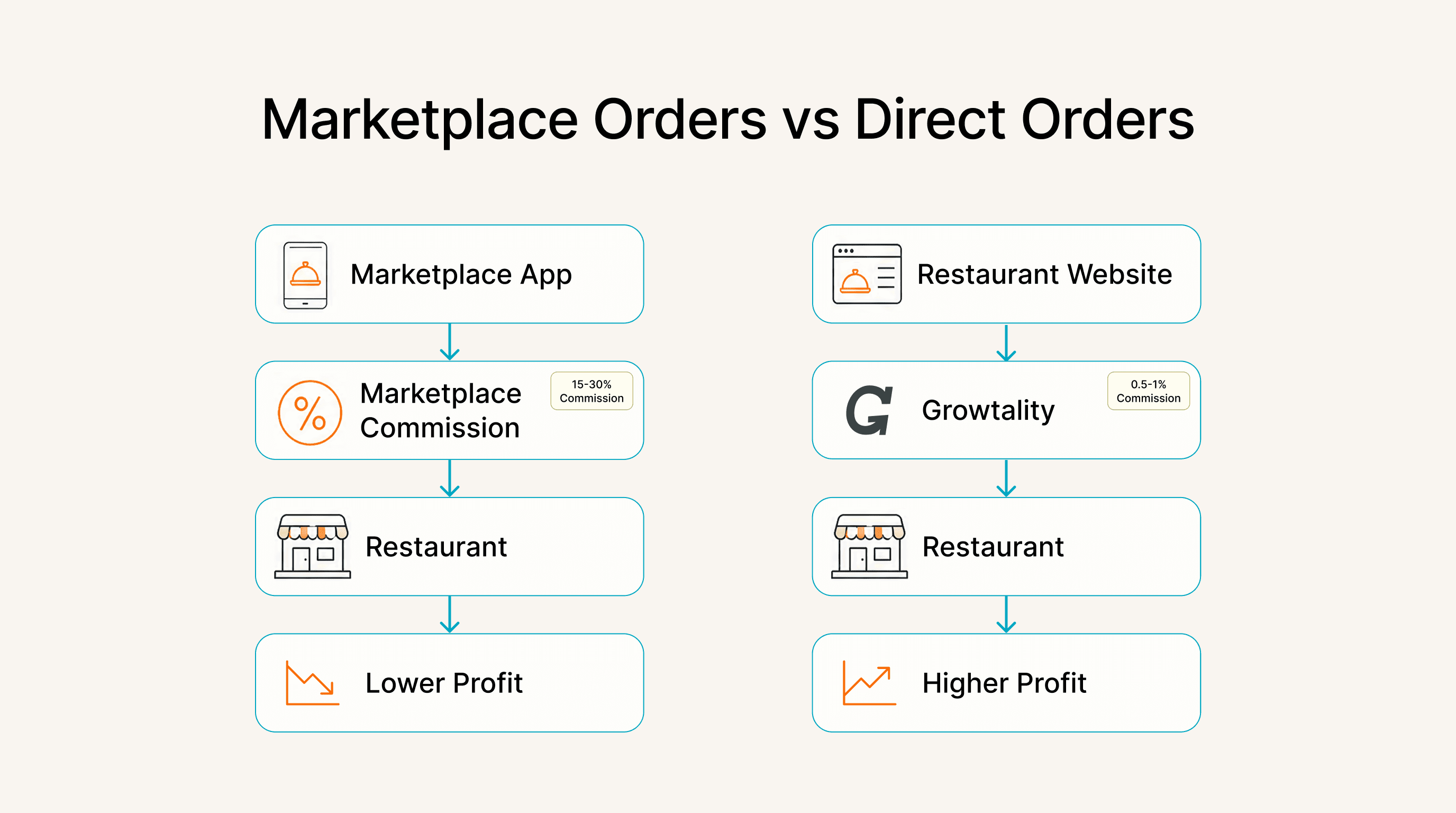
Restaurant owners increasingly view direct ordering as an investment rather than simply another ordering channel.
The first order may come through a delivery app.
The second—and hopefully every order after that—comes directly.
AI Is Quietly Changing Restaurant Operations
Artificial intelligence isn't replacing restaurant teams.
Instead, it's helping owners make faster and smarter decisions.
Restaurants are using AI to:
• Forecast customer demand
• Reduce food waste
• Optimise staffing levels
• Automate marketing campaigns
• Improve customer engagement
Rather than adding more work, AI is reducing repetitive tasks and giving operators better visibility into daily performance.
For independent restaurants working with tight margins, even small improvements can make a noticeable difference.
What Restaurant Owners Are Prioritising Next
The industry's focus is shifting.
Instead of chasing order volume alone, operators are looking for sustainable growth.
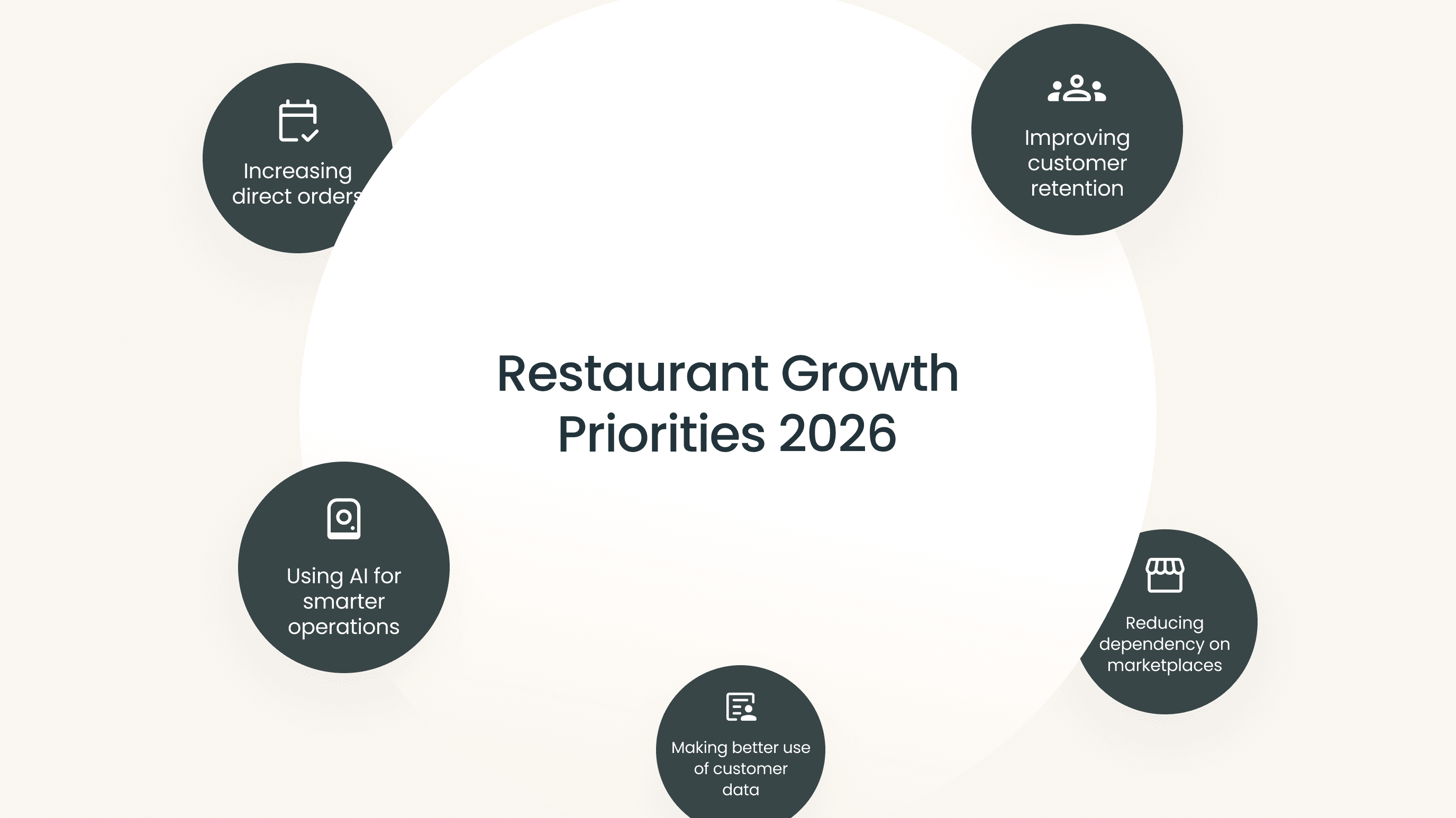
The biggest priorities include:
• Increasing direct orders
• Improving customer retention
• Using AI for smarter operations
• Making better use of customer data
• Reducing dependency on third-party marketplaces
The conversation is no longer about replacing delivery apps.
It's about building a healthier business alongside them.
UK Food Delivery Market 2026: Key Numbers
Metric | 2026 Figure |
|---|---|
UK online food delivery market | £14.3B |
Dining occasions involving delivery | 20% |
Delivery app commission | 20-30% |
Independent restaurant net margins | 3-8% |
Major industry trend | Direct ordering + AI |
Key Takeaways
• The UK delivery market continues to grow rapidly.
• Higher order volume doesn't automatically increase profits.
• Commission fees often exceed restaurant profit margins.
• Owning customer relationships is becoming a competitive advantage.
• Direct ordering improves retention and long-term profitability.
• AI is helping restaurants operate more efficiently without replacing staff.
• The future belongs to restaurants that balance marketplace visibility with customer ownership.
Final Thoughts
Delivery apps have transformed how people order food across the UK, and they're likely to remain an important part of the industry.
But in 2026, successful restaurants are looking beyond order volume.
They're focusing on building direct customer relationships, improving retention, using AI to streamline operations, and creating healthier profit margins.
Rather than relying entirely on third-party platforms, more operators are combining delivery apps with direct ordering strategies that give them greater control over their business.
That's where platforms like Growtality fit in—helping restaurants increase direct orders, retain customers, use AI insights, and reduce dependency on third-party marketplaces.
Because the future of restaurant growth isn't just about getting more orders.
It's about owning the customer behind every order.